
Introduction
Thrift shopping is exciting. You never really know what you are going to find.
One day, it might be a vintage denim jacket hidden between ordinary shirts. Another day, a designer sweater sitting quietly on a clearance rack. That unpredictability is part of the fun.
But here’s the thing. Not every thrifted item is worth buying.
Many shoppers get carried away by low prices and end up bringing home clothes they never wear. Others overlook incredible finds simply because they don’t know what to look for.
The good news? Learning how to spot quality thrifted clothing isn’t difficult. It just takes a little knowledge, some patience, and a sharp eye.
In this guide, we’ll explore exactly what you should look for when buying thrifted clothing so you can shop smarter and build a wardrobe filled with unique, affordable pieces.
What Makes Thrifted Clothing Worth Buying?
Not all second-hand clothing offers the same value.
Some pieces are worn out beyond repair. Others are hidden treasures waiting to be discovered.
A good thrifted item usually checks several boxes:
- Quality materials
- Strong construction
- Good condition
- Timeless style
- Fair price
- Comfortable fit
Think about long-term value.
A well-made jacket that lasts five years is often a better purchase than a trendy shirt you’ll wear twice.
Sometimes cheaper isn’t actually cheaper.
Why Should You Inspect Every Item Carefully?
A few years ago, a shopper found a beautiful wool coat in a thrift store. The price was unbelievable. The fabric looked premium. Everything seemed perfect.
Almost.
After bringing it home, they noticed several tiny moth holes hidden under the collar.
The coat became unwearable.
This happens more often than people realize.
That’s why inspection matters.
Always take a closer look before purchasing.
Small details can save you money and disappointment.
Who Benefits Most From Buying Thrifted Clothing?
Almost everyone.
Students love thrift shopping because it helps stretch a limited budget.
Fashion enthusiasts enjoy discovering unique pieces.
Vintage collectors search for rare finds.
Environmentally conscious shoppers appreciate reducing waste.
Even people with large budgets thrift.
Why?
Because great style isn’t always about spending more money.
Sometimes it’s about finding something nobody else has.
Where Should You Check First When Examining Thrifted Clothing?
Most people immediately look at the front of a garment.
That’s a mistake.
The real clues often hide elsewhere.
Check the Collar
Collars experience constant friction.
Look for:
- Fraying
- Discoloration
- Stretching
- Fabric thinning
Heavy wear around the collar may indicate extensive use.
Examine the Underarms
This area can reveal a lot.
Check for:
- Stains
- Fabric damage
- Odors
- Sweat discoloration
Some stains are removable.
Others stay forever.
Inspect the Cuffs
Sleeves often show wear before other areas.
Pay attention to:
- Loose threads
- Fading
- Holes
- Elastic damage
Small issues may be fixable.
Major wear usually isn’t worth the risk.
Look at the Hem
The hem tells part of the garment’s story.
Check whether it hangs evenly and remains intact.
Uneven wear may indicate poor condition.
When Should You Walk Away From a Thrifted Item?
Not every bargain deserves your money.
Sometimes the best purchase is the one you don’t make.
Walk away if you notice:
Permanent Stains
Certain stains never fully disappear.
Examples include:
- Bleach marks
- Oil stains
- Ink stains
Unless you’re planning a creative upcycling project, it’s often best to skip them.
Strong Odors
A mild smell is normal.
A strong odor isn’t.
Mold, mildew, and smoke can be difficult to remove completely.
Trust your nose.
Severe Fabric Damage
Small repairs are manageable.
Large tears usually aren’t worth the effort.
Particularly if replacement costs exceed the item’s value.
Poor Fit
Many shoppers make this mistake.
They buy something hoping it will fit later.
Usually, it doesn’t.
Buy clothes that work for you now.
How Can You Tell If the Fabric Is High Quality?
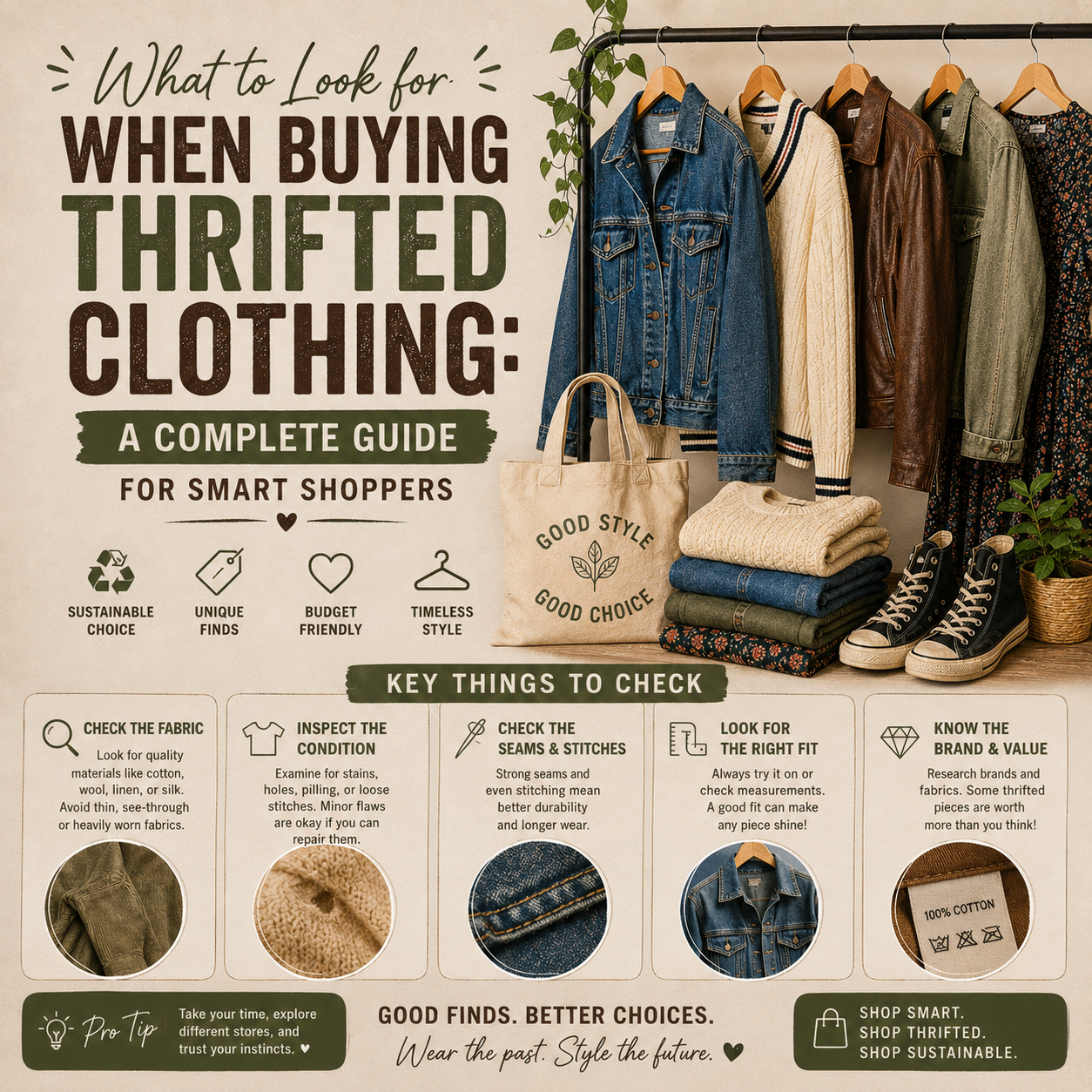
Fabric quality is one of the most important factors in thrift shopping.
Good fabric often lasts for years.
Poor fabric may lose shape after a few washes.
Feel the Material
Touch matters.
Premium fabrics tend to feel different.
Look for:
- Cotton
- Wool
- Linen
- Silk
- Cashmere
- Leather
These materials generally age better than synthetic alternatives.
Check Fabric Thickness
Thin fabric isn’t always bad.
But unusually thin material can signal wear.
Hold the garment up to light.
Excessive transparency may indicate fabric weakening.
Look for Natural Fibers
Natural fibers often provide:
- Better breathability
- Greater durability
- Improved comfort
Many experienced thrift shoppers prioritize fabric over brand names.
And honestly, they’re usually right.
What Should You Know About Clothing Brands?
Brands can be helpful.
But they aren’t everything.
A famous label doesn’t automatically guarantee quality.
At the same time, certain brands have built reputations for durability and craftsmanship.
Popular thrift finds often include:
- Levi’s
- Carhartt
- Patagonia
- Ralph Lauren
- Wrangler
- The North Face
- Champion
- Tommy Hilfiger
Still, don’t ignore lesser-known brands.
Some hidden gems come from companies few people recognize.
Quality often speaks louder than logos.
Why Is Stitching So Important?
Imagine buying a beautiful jacket.
The fabric looks amazing.
The design is perfect.
Then the seams begin falling apart after two wears.
Not ideal.
Strong stitching is one of the easiest indicators of quality.
Look closely at:
Seam Construction
Good seams should appear:
- Straight
- Tight
- Even
Loose or uneven stitching may signal poor manufacturing.
Reinforced Areas
Higher-quality garments often reinforce stress points.
Examples include:
- Pockets
- Shoulders
- Belt loops
These details help clothing survive years of use.
How Can You Identify Vintage Pieces?
Vintage clothing continues growing in popularity.
But identifying authentic vintage items takes practice.
Check the Tags
Older labels often look different from modern branding.
Pay attention to:
- Fonts
- Logos
- Tag materials
Vintage tags frequently have unique characteristics.
Look for Single Stitching
Older T-shirts commonly feature single-stitch hems.
This detail often suggests the garment predates modern manufacturing methods.
Observe Design Trends
Fashion changes constantly.
Vintage garments often reflect trends from specific decades.
Oversized silhouettes. Bold graphics. Unique patterns.
They tell stories.
What Role Does Fit Play in Thrift Shopping?
Fit is everything.
Even expensive clothing looks awkward if it doesn’t fit properly.
Before purchasing, ask yourself:
- Does it fit comfortably?
- Can I move naturally?
- Does it suit my style?
Don’t focus only on size labels.
Sizes change over time.
A vintage medium may fit like a modern small.
Always try items on when possible.
Numbers can be misleading.
Which Clothing Categories Offer the Best Value?
Some categories consistently provide excellent thrift finds.
Denim
Quality denim often becomes more attractive with age.
Vintage jeans remain highly desirable.
Jackets
Leather jackets, denim jackets, and wool coats frequently offer incredible value.
Sweaters
Cashmere and wool sweaters can sometimes be found for a fraction of their original price.
Graphic T-Shirts
Vintage graphic tees continue attracting collectors and fashion lovers.
Workwear
Older workwear garments are often built to last.
Durability matters.
How Can You Evaluate the Price?
A low price doesn’t automatically mean a good deal.
Think about value.
Ask yourself:
- How often will I wear it?
- Is the quality strong?
- Does it require repairs?
- Would I buy it at full price?
Sometimes paying slightly more for a better item is the smarter choice.
Quality saves money in the long run.
Why Is Patience One of the Most Important Skills?
Because thrift shopping is unpredictable.
Some days you’ll find incredible pieces.
Other days you’ll find nothing.
That’s normal.
Many beginners expect every visit to produce amazing results.
Experienced thrifters know better.
The hunt is part of the experience.
Patience leads to better decisions.
And often, better finds.
What Questions Should You Ask Yourself Before Buying?
Before heading to checkout, pause for a moment.
Ask:
Do I Actually Like This Item?
Or am I buying it because it’s cheap?
Will I Wear It Regularly?
If not, leave it behind.
Does It Match My Existing Wardrobe?
Versatility increases value.
Is It In Good Condition?
Small issues are fine.
Major problems usually aren’t.
Simple questions prevent unnecessary purchases.
How Can Thrift Shopping Improve Your Personal Style?
One of the biggest advantages of thrifting is individuality.
Fast fashion often produces identical trends.
Thrift stores offer something different.
Something unique.
You can experiment.
Mix styles.
Discover pieces that express your personality.
Many of the best-dressed people don’t spend the most money.
They simply know how to find interesting clothing.
Thrifting helps develop that skill.
Conclusion
Buying thrifted clothing is about more than finding low prices. It’s about recognizing quality, understanding value, and discovering pieces that fit your lifestyle.
Check fabrics carefully. Inspect stitching. Examine collars, cuffs, and seams. Pay attention to fit. Learn about brands, but don’t become obsessed with them.
Most importantly, be patient.
Every thrift store visit is different. Some racks hide ordinary clothes. Others contain incredible treasures waiting to be noticed.
The more you practice, the sharper your eye becomes.
And before long, you’ll walk into a thrift store with confidence, knowing exactly what to look for and exactly what to leave behind.
Because the best thrift shoppers aren’t just lucky.
They know what they are searching for.
Leave a Reply