

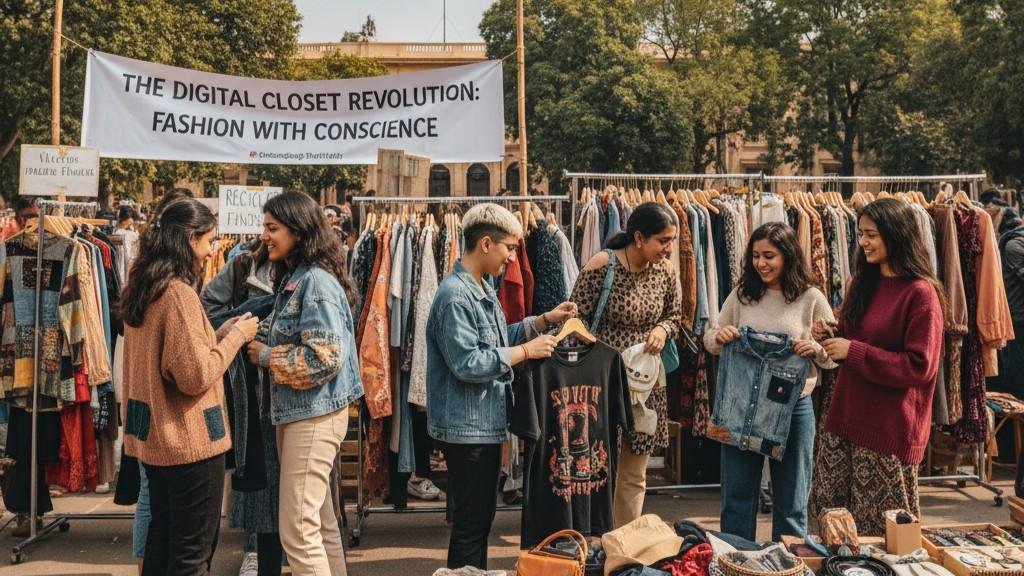
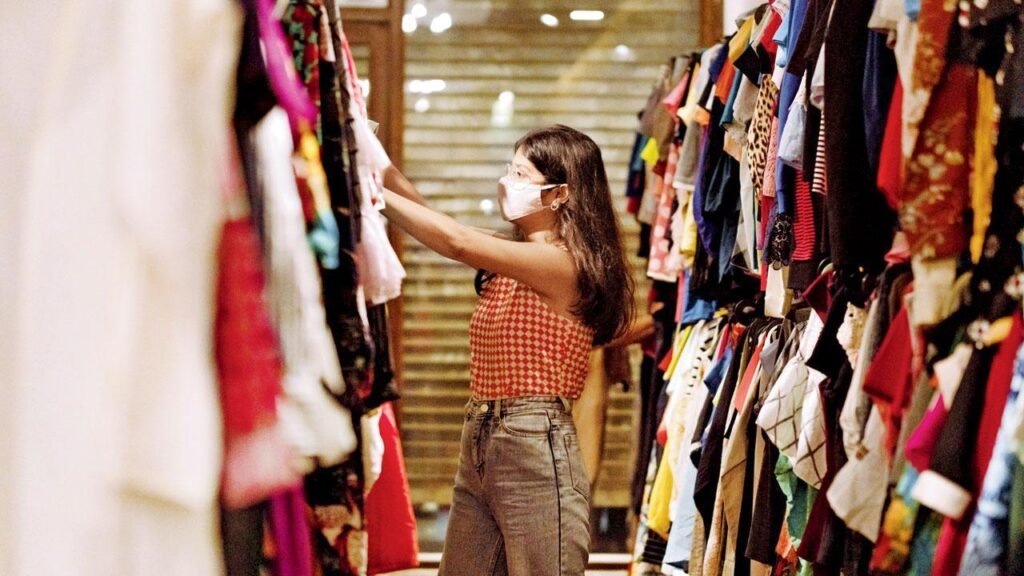
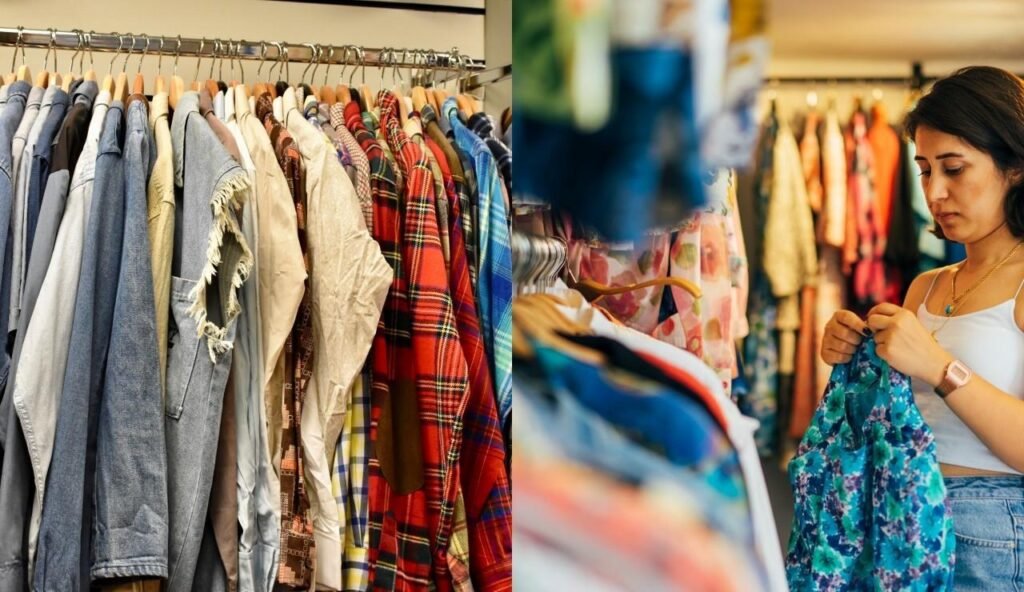
Imagine scrolling through your phone late at night. You see a vintage oversized jacket that looks completely different from everything hanging in your college friends’ wardrobes. The price is surprisingly affordable, the piece is one-of-a-kind, and instead of being produced for you today, it already has a story of its own. You click “Buy Now.”
For a growing number of young Indians, this is what fashion looks like today.
The rise of the online thrift store in India is changing the way people discover, buy, and think about clothing. What was once associated mainly with street markets and second-hand shops has moved onto Instagram, websites and digital marketplaces. For Gen Z especially, thrift fashion combines three things that matter: individual style, affordability and a more conscious approach to consumption.
India generated approximately 70.73 lakh tonnes of textile waste annually, according to a 2026 Ministry of Textiles report. Around 58% of that waste comes from post-consumer sources, meaning clothing and textiles discarded after use. More than 70% of the total textile waste is currently recovered through recycling, upcycling, downcycling, or reuse.
At the same time, India’s digital audience is enormous. DataReportal reported 806 million internet users in India in January 2025, representing 55.3% internet penetration.
Put those two trends together, and an interesting opportunity appears: fashion that is discovered digitally but keeps clothing in use for longer.
What Is an Online Thrift Store?
An online thrift store is a digital platform where consumers can purchase pre-owned, vintage, surplus or otherwise previously owned fashion items.
Unlike traditional retail, where every item is generally manufactured and sold as new, thrift shopping gives existing clothing another opportunity to be worn.
Depending on the store, shoppers may find:
- Pre-loved T-shirts
- Oversized shirts
- Vintage jackets
- Denim
- Streetwear
- Hoodies
- Sneakers
- Bags
- Accessories
- Y2K-inspired fashion
- Designer or branded pre-owned pieces
- Rare and one-of-a-kind garments
The biggest difference is that a thrift collection often doesn’t feel mass-produced. A particular item may be available in only one piece, making the shopping experience more about discovery than simply choosing a size and colour from hundreds of identical products.
Research by the World Resources Institute found that Indian secondhand-clothing buyers tend to be younger, with affordability and reduced environmental impact among the motivations for purchasing pre-owned clothing.
Why Are Online Thrift Stores Becoming Popular in India?
The growth of online thrifting isn’t happening for just one reason. Several changes in consumer behaviour are happening simultaneously.
1. Gen Z Wants Individuality
Fashion trends can move extremely quickly online. A style can become popular on Instagram or TikTok and disappear a few weeks later.
That creates a problem: if everyone purchases the same trend from the same fast-fashion stores, individuality becomes difficult.
Thrifting offers another route.
Instead of asking:
“What is everyone wearing?”
young shoppers can ask:
“What can I find that nobody else has?”
Vintage graphics, unusual denim, old-school jackets, and oversized silhouettes can help create outfits that feel more personal.
A 2026 youth-fashion study reported that 77% of Gen Z and younger millennials surveyed purchased at least some second-hand clothing, showing how secondhand fashion is becoming a meaningful part of youth wardrobes.
2. Affordable Fashion Matters
For students and young professionals, fashion budgets are not unlimited.
A thrift store can make it possible to experiment with styles without paying full retail prices for every item.
Instead of spending ₹2,000–₹4,000 on multiple new pieces, a shopper may be able to build an interesting outfit using carefully selected pre-owned garments.
This makes thrifting particularly attractive to:
- College students
- Young professionals
- First-job earners
- Streetwear enthusiasts
- Vintage-fashion lovers
- Budget-conscious shoppers
- Gen Z consumers experimenting with their identity
The affordability factor is important because sustainability alone doesn’t automatically make a product attractive. For many young consumers, price + style + uniqueness is the combination that makes thrift fashion compelling.
The Sustainability Side of Thrifting
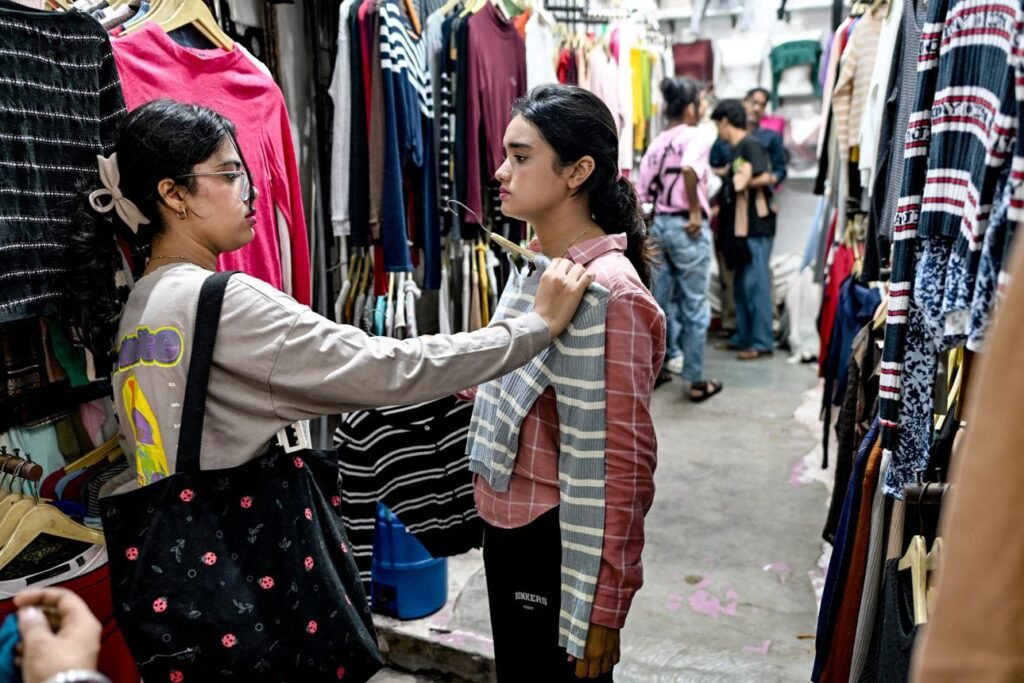
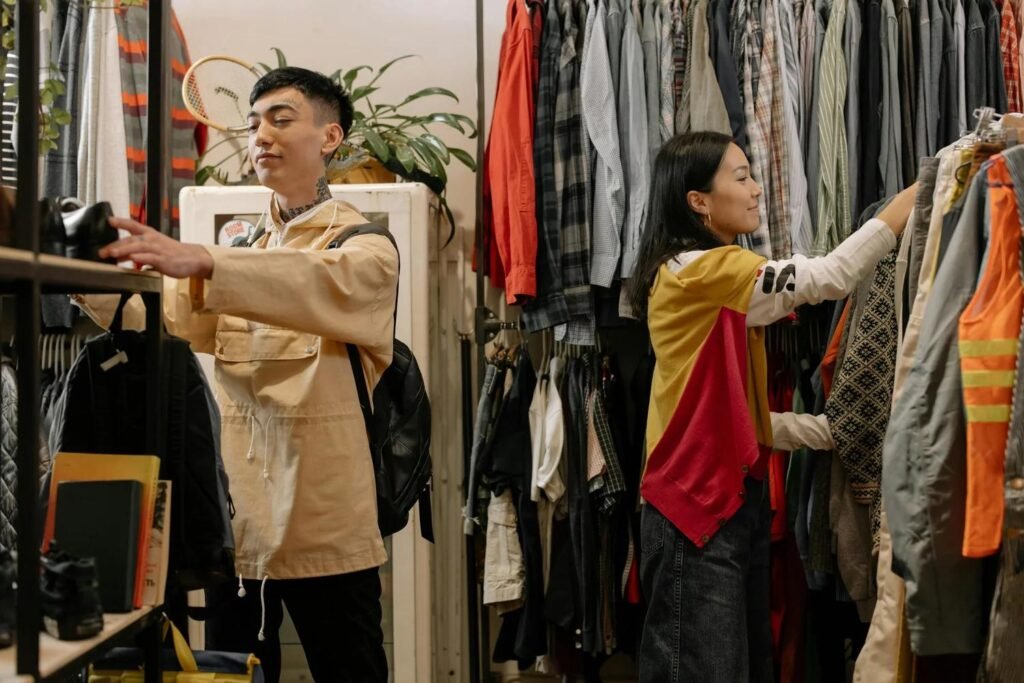
One of the strongest arguments for buying pre-loved clothing is the opportunity to extend the useful life of garments.
Every time an existing piece of clothing is purchased and worn again, it remains part of the fashion system instead of immediately becoming waste.
India’s Ministry of Textiles estimates annual textile waste at approximately 7.073 million tonnes, with more than 70% currently recovered through various reuse and recycling pathways.
The country’s textile-recycling ecosystem also represents an economic opportunity. A government release citing industry research estimated that India’s textile-waste ecosystem currently generates around ₹22,000 crore in annual economic value, with further potential through better sorting, segregation and higher-value recycling.
However, it is important not to present thrifting as a magic solution to fashion’s environmental problems.
Buying second-hand is most useful when it actually replaces the purchase of something new or keeps an existing garment in circulation. If someone buys ten thrifted shirts they don’t need simply because they’re inexpensive, the environmental benefit becomes much less meaningful.
The better philosophy is simple:
Buy what you love. Wear it often. Keep it in use.
Online Thrifting vs Traditional Shopping
Traditional shopping and online thrifting can serve different purposes.
| Traditional Fashion Shopping | Online Thrift Shopping |
|---|---|
| Mostly new products | Mostly pre-owned/pre-loved products |
| Multiple units available | Often limited to one piece |
| Seasonal collections | Vintage, random and curated finds |
| Predictable sizing | Measurements may vary |
| Standardized products | Unique products |
| Trend-focused | Can include vintage and timeless styles |
| Usually fixed retail pricing | Often lower than original retail |
Online thrift shopping also removes one major barrier of traditional street-market thrifting: location.
A shopper in Jaipur, Mumbai, Delhi, Bengaluru, or a smaller Indian city can potentially discover pieces from sellers located elsewhere.
India’s huge internet population makes this possible. With 806 million internet users recorded at the beginning of 2025, digital commerce gives niche fashion categories access to an enormous potential audience.
Why Online Thrifting Fits Gen Z So Well
Gen Z has grown up with smartphones, social media, and visual discovery.
For this generation, shopping isn’t always a separate activity.
A person might discover a jacket through a Reel, check the seller’s page, look at customer reviews, compare styling ideas, and complete the purchase without leaving their phone.
Research focused specifically on Gen Z and online thrifting in India describes social-networking platforms as an important environment for discovering and consuming used fashion.
This is why online thrift stores can feel different from conventional ecommerce websites.
The experience can feel more like discovering a hidden treasure than shopping from a catalogue.
A vintage shirt isn’t simply a shirt.
It’s:
- A potential Instagram outfit
- A college look
- A weekend fit
- A conversation starter
- A piece of fashion history
- Something that can be styled differently from mainstream clothing
The Importance of Trust in an Online Thrift Store
There is one major challenge that online thrift stores must solve: trust.
When customers buy a new T-shirt from a conventional retailer, they generally know what they’re getting.
With pre-owned clothing, customers want answers.
Is it clean?
What condition is it in?
Are there stains?
Is the colour accurate?
What are the exact measurements?
Is the product genuine?
Are there visible signs of wear?
These questions matter.
The World Resources Institute identified hygiene and clothing condition as two of the major barriers to secondhand clothing adoption among surveyed Indian consumers.
That’s why a reliable online thrift store should provide:
- Clear photographs
- Accurate measurements
- Condition grading
- Information about visible flaws
- Fabric information where available
- Honest product descriptions
- Secure payment options
- Clear shipping policies
- Responsive customer support
Transparency can turn a first-time buyer into a repeat customer.
How to Shop Smart at an Online Thrift Store
Thrifting can be exciting, but smart shoppers should still do their homework.
1. Check Measurements
Don’t depend only on S, M, L, or XL.
Pre-owned clothing can have different sizing standards depending on the brand, country, and era.
Check:
- Chest
- Length
- Shoulder
- Waist
- Inseam
when those measurements are available.
2. Examine the Photos
Look closely at the actual product photographs.
Check the fabric, stitching, cuffs, collars, prints and any visible imperfections.
3. Read the Condition
A good thrift store should clearly communicate whether an item is:
- Like new
- Excellent condition
- Good condition
- Gently used
- Vintage with natural wear
4. Understand the Return Policy
Before purchasing, understand whether the store accepts returns, exchanges or refunds.
5. Avoid Buying Just Because It’s Cheap
The best thrift purchase isn’t necessarily the cheapest one.
It’s the item you’ll actually wear.
Thrifting Is Also Becoming a Side Hustle
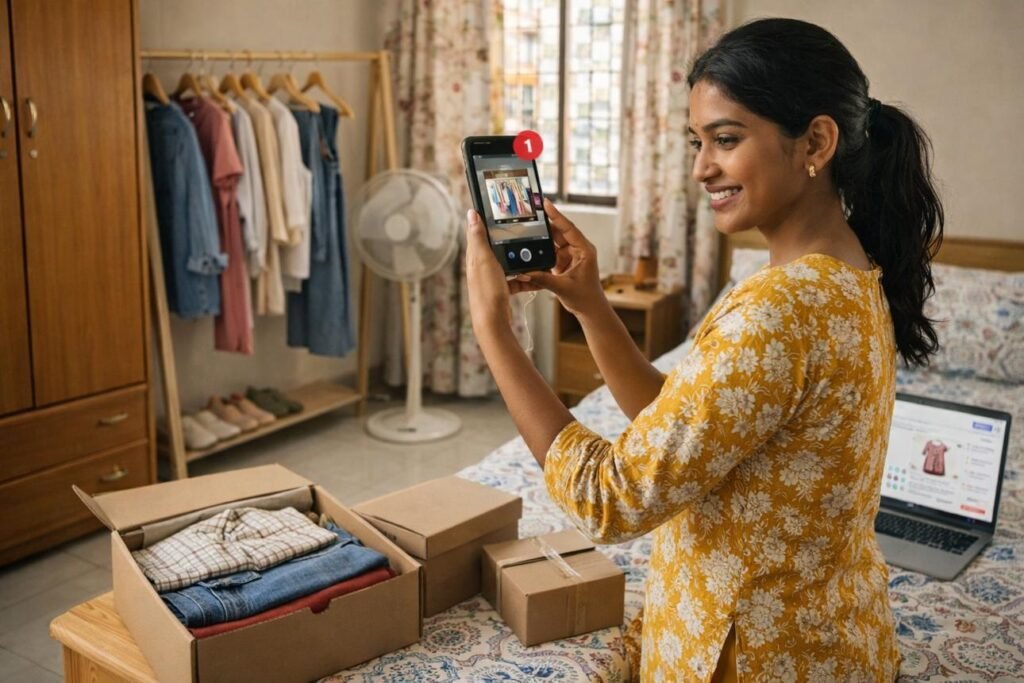
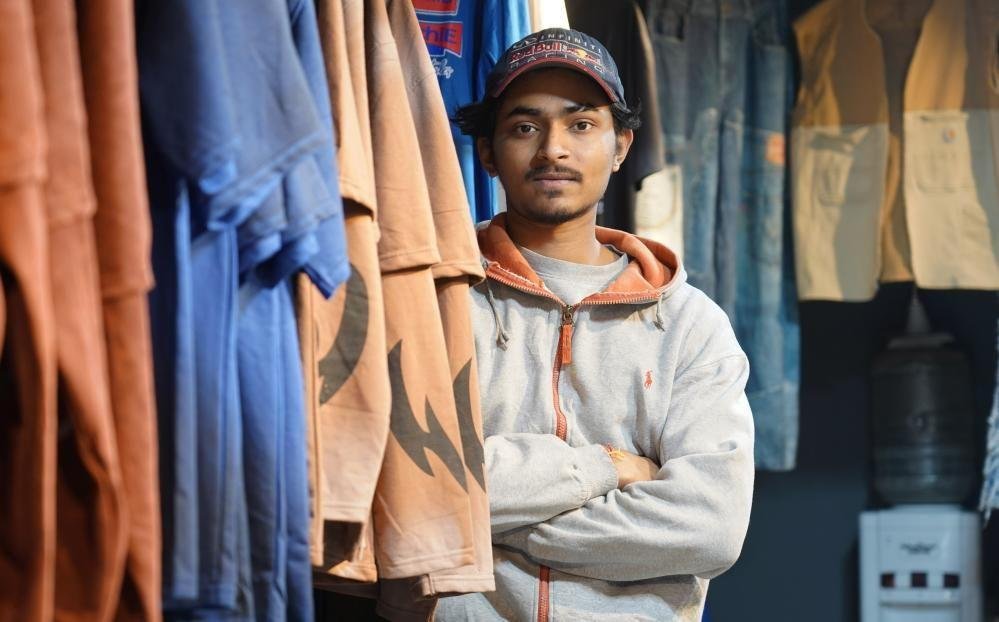
The online thrift revolution isn’t only creating new shopping habits. It is also creating opportunities for young people to become sellers.
In India, young entrepreneurs have increasingly used Instagram and other digital channels to sell pre-owned clothing. Recent reporting has highlighted how Gen Z sellers are turning secondhand fashion into side hustles and income streams.
The basic model can be relatively simple:
Find → Curate → Photograph → List → Market → Sell → Repeat
A person clearing their wardrobe can potentially sell clothes they no longer wear rather than leaving them unused.
This creates a more circular relationship with clothing.
Instead of:
Buy → Wear → Forget → Throw away
the cycle can become:
Buy → Wear → Resell → Wear again
That change in mindset is one of the most interesting aspects of the thrift movement.
How Kshama Can Help the New Generation
For today’s generation, fashion is about more than simply following a trend.
It is about finding an identity.
Kshama aims to be part of this new fashion mindset by helping young shoppers discover style that feels personal, accessible, and relevant to the way Gen Z actually dresses.
The goal isn’t to tell young people what they should wear.
It’s to encourage them to explore.
Whether someone loves oversized streetwear, vintage-inspired outfits, casual everyday pieces, or experimental looks, an online-first fashion experience can make discovering those styles easier.
For Gen Z, the future of fashion can be less about owning more and more about choosing better, styling creatively, and making every piece feel like their own.
The Future of Online Thrift Stores in India
The Indian secondhand fashion market is still developing, which makes its future particularly interesting.
A 2025 market estimate cited by Outlook Money projected India’s second-hand apparel market to grow from $5.20 billion in 2025 to $17.90 billion by 2031, representing a projected CAGR of 22.8%.
Meanwhile, India’s broader digital commerce ecosystem continues to expand, supported by a massive internet audience and increasingly digital-first consumers.
This suggests that online thrift stores could evolve beyond simple Instagram resale pages.
The next generation of platforms may offer:
- Better product authentication
- Improved search and filtering
- Personalized recommendations
- Digital wardrobes
- Seller marketplaces
- Clothing resale tools
- Repair and upcycling services
- Better logistics
- More transparent condition grading
- Community-driven fashion discovery
In other words, the future of thrifting may not simply be about buying second-hand.
It could become part of a broader circular fashion ecosystem.
Challenges the Thrift Industry Still Needs to Solve
Despite its growth, online thrifting has challenges.
Quality Control
Every pre-owned item is different, making consistent quality harder than traditional retail.
Hygiene Concerns
Customers need confidence that products have been appropriately cleaned and prepared.
Sizing
Vintage and second-hand sizing can be inconsistent.
Authenticity
Branded second-hand products require careful verification to avoid counterfeit goods.
Logistics
Shipping a single unique product can be more complicated than shipping standardized inventory.
Customer Expectations
Customers accustomed to new retail products may expect perfect condition from every purchase.
Solving these challenges will be essential if online thrift stores want to move from a niche community into mainstream Indian fashion.
What Makes a Great Online Thrift Store?
A successful thrift store shouldn’t simply upload random clothes and wait for customers.
It should create a curated experience.
The best experience combines:
Good products + honest information + strong photography + fair pricing + reliable service.
But there is another ingredient that matters just as much:
Community.
Thrifting becomes more exciting when customers can share styling ideas, discover rare pieces, sell clothes from their own wardrobes, and participate in a culture that values creativity over constant consumption.
That community element is particularly important for Gen Z, a generation that often discovers fashion through people and communities rather than traditional advertising alone.
Conclusion: Is Online Thrifting the Future of Fashion in India?
The rise of the online thrift store in India represents more than a change in where people buy clothes.
It represents a change in how people think about fashion.
For Gen Z, second-hand fashion can offer affordability without sacrificing individuality. It can provide access to vintage and unusual pieces while helping existing garments stay in circulation. And for young sellers, it can create opportunities to turn unused wardrobes into small digital businesses.
India’s enormous digital population, growing interest in secondhand fashion, and massive textile-waste challenge create an environment where circular fashion has significant room to grow.
The future probably won’t be about choosing between new fashion and second-hand fashion.
Instead, it may be about having more choices: buying new when necessary, buying pre-loved when possible, reselling what we no longer wear and giving good clothing another life.
Because when fashion becomes more personal, more accessible and more circular, could the next great outfit already be waiting for its second life?
Leave a Reply