

Picture a college student in front of a wardrobe full of clothes, and yet he will still say, “I have nothing to wear.”
The real issue isn’t that there isn’t enough clothing; it’s the impression that all the clothes look identical.
Identical oversized T-shirts, identical sneakers, identical cargo pants, and the same fashion trends showing up on everybody’s social-media feed.
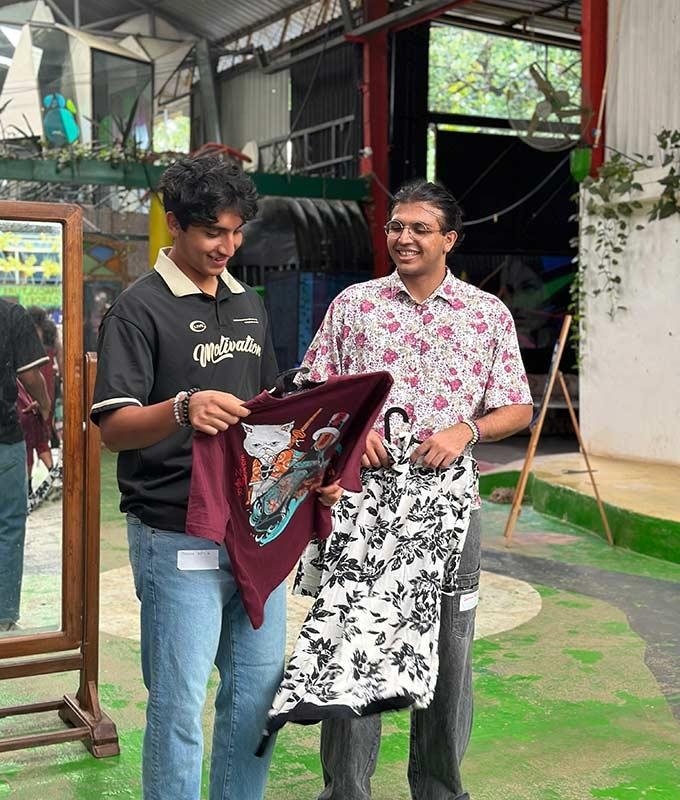
One evening, as the student was browsing the internet, they came across an old-fashioned graphic tee which appeared to be entirely different. It was not one of those shirts displayed in all shopping centres. The tee had personality, gave the impression of being original, and most importantly, it was within budget.
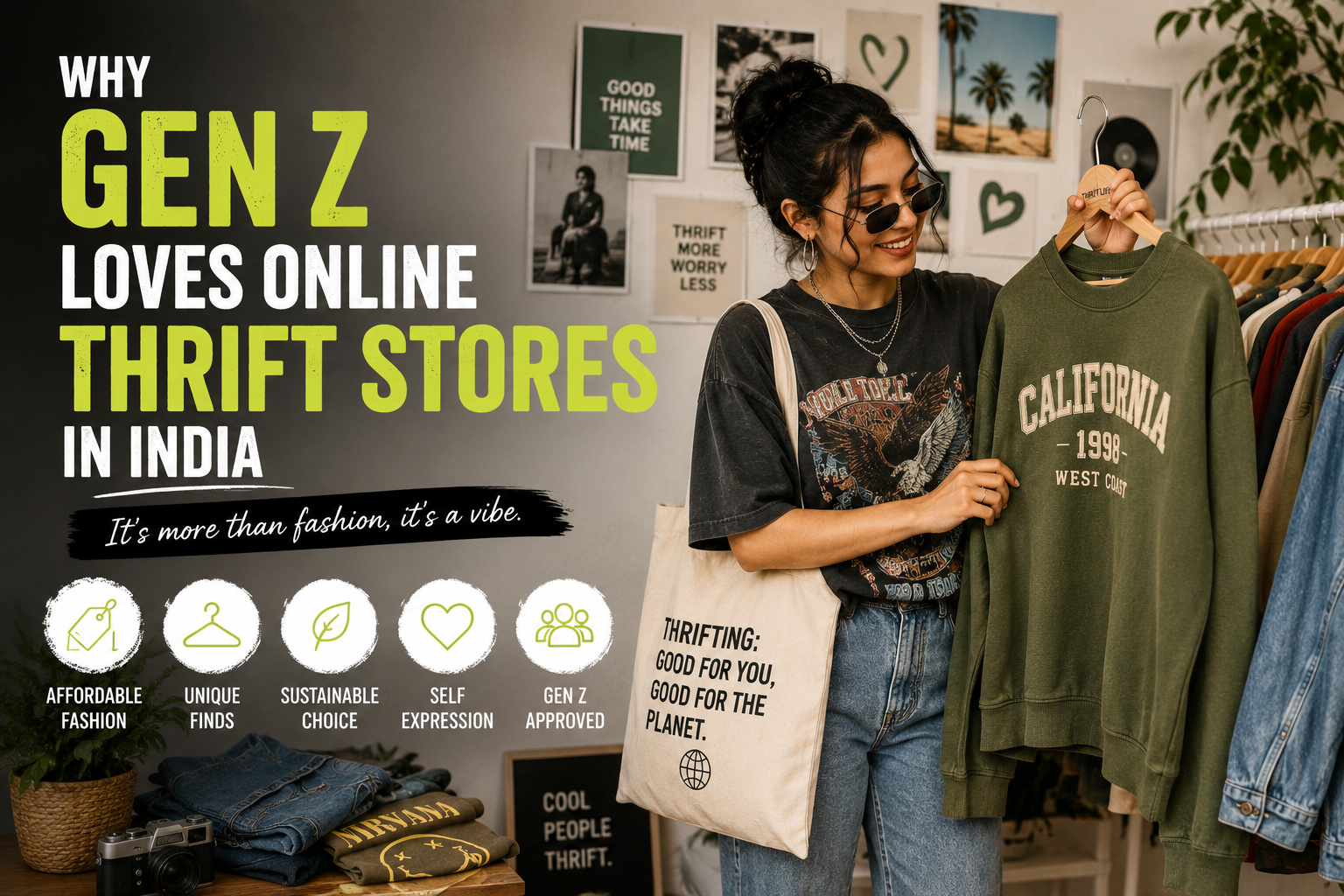
The fact that this small discovery has been made sheds a lot of light on the reason why online thrift stores in India are attracting Gen Z.
Thrift shopping for India’s younger people is not just about purchasing second-hand clothes; it can also be a way of expressing oneself, an option because of its affordability, a means of appealing to nostalgia, an act based on sustainability, and the thrill of coming across something that no one else has.
Gen Z Is Changing the Meaning of Fashion
Fashion has always been linked to identity, but social media has speeded up this connection.
Someone might find a fashion style in the morning and by the evening have completely changed the inspiration for their wardrobe.
Y2K.
Vintage.
Streetwear.
Minimalism.
Old-school sportswear.
Retro denim.
Now that the internet exists, Indian consumers can access all of these styles.
The fact that India has a large digital audience means that this shift is particularly significant. According to DataReportal, there were 806 million internet users in India in January 2025, and 491 million social media user identities as well.
For members of Generation Z, finding out about fashion is increasingly done via a screen.
That is why online second-hand stores are well suited to the way this generation shops.
1. Thrifting Offers Gen Z Something New
A major draw of shopping around for second-hand goods is that they are unique.
If you purchase a mass-produced product, then thousands of other people will also own the same item.
A thrifted piece can stand out.
It is possible that the graphic comes from another era.
It is possible that the combination of colours is unusual.
It’s possible that the cut is too large.
It’s possible that the item has a vintage appearance which modern shops are attempting to replicate.
It gives thrifting the character of searching for treasure rather than that of conventional retail.
For Gen Z, that feeling is important.
It is not always necessary to find the most expensive suit.
Sometimes it’s simply to find the piece that makes someone ask:
“How on earth did you obtain that?”
2. Affordable fashion is important
Young consumers generally have small amounts of money available for fashion.
Students can count on having pocket money, whereas young professionals are dealing with their first salaries and new expenses.
Thrifting provides an alternative method of experimenting with clothes without having to pay the full retail prices.
A study carried out by the World Resources Institute showed that Indian consumers were influenced to buy secondhand clothing because of the lower prices and the smaller environmental impact. The study also revealed that secondhand buyers were more likely to be young, specifically under the age of 35.
This means that thrift fashion is especially relevant to members of Gen Z.
Rather than spending a lot of money on each new trend, shoppers can choose to buy only those items that they truly enjoy.
3. The Excitement of Finding Hidden Gems
There is a different psychological aspect to coming across a rare item.
In a regular clothing shop, you usually have a clear idea of what you want.
At a second-hand store, you can’t always tell.
You could end up coming across a jacket that you had not been looking for.
It is possible that you could come across a vintage shirt mixed in with some regular items.
You could come across a strange pair of trousers which would alter your conception of what an outfit should be.
The unpredictable aspect is part of the experience.
Shopping becomes a process of discovery.
4. Gen Z Loves Vintage Fashion
Vintage fashion is now particularly attractive to young shoppers.
One of the reasons is a longing for the past.
The Gen Z group is always coming across styles from earlier decades via social media.
The fashion of the 1990s and 2000s can at any moment once again become relevant.
Used graphic T-shirts can be turned into streetwear.
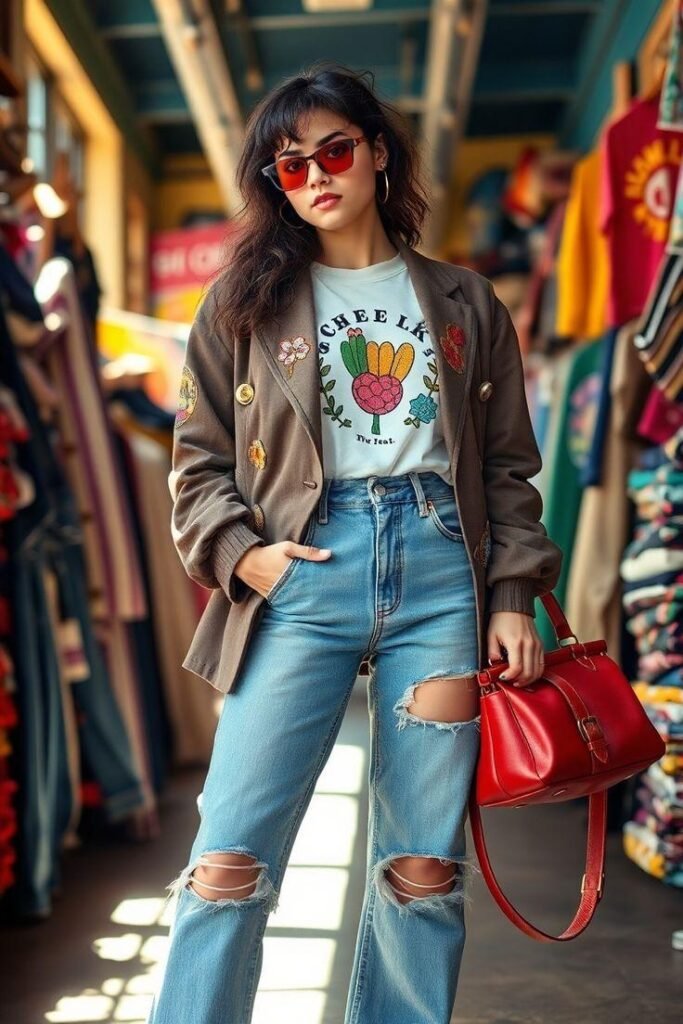
Baggy jeans have become a part of everyday fashion.
Retro sports jackets can act as statement items.
Vintage accessories can be included in modern outfits.
What is interesting is that the Gen Z group doesn’t always exactly reproduce a previous style.
Rather, young shoppers combine the old with the new.
A modern pair of sneakers can be worn with a vintage shirt.
Old denim can be worn with a modern crop top.
A retro style jacket can be paired with modern cargo pants.
The ability to combine different eras makes thrifty fashion very creative.
5. Thrifting Promotes Personal Style
Fashion takes an interest in people when it ceases to be about copying.
A thrift store can serve as a source of raw material for one’s personal style.
A shopper doesn’t have to buy an entire outfit that has been designed by a brand; instead, they can put one together on their own.
A person could match a vintage shirt with loose denim.
Someone could decorate a second-hand jacket with sneakers.
It’s possible that another person could turn an old large T-shirt into a totally different style of streetwear.
The clothes serve as a starting point.
It is the person who is wearing it who owns the creativity.
Sustainability Is Now Being Discussed
Thrifting is also part of a broader discussion regarding fashion waste.
In 2026, the Indian Ministry of Textiles stated that the country produces about 70.73 lakh tonnes of textile waste each year and also forecast that the value of India’s textile recycling market would be US$3.5 billion by 2030.
It doesn’t follow that buying secondhand makes all purchases sustainable.
A better method is to buy with care and to keep clothes in use for as long as possible.
The WRI has identified secondhand and reuse models as possible elements of a circular fashion system.
This means that thrift shopping acquires an extra level of significance for environmentally aware members of Gen Z.
7. Social Media Makes Thrifting Easy to Discover
The conventional fashion journey began in a physical store.
It can begin with a Reel today.
A young shopper could come across a person wearing a vintage jacket, look for similar items, find a second-hand seller, and buy them online.
It is possible due to the fact that India’s digital ecosystem is huge.
According to DataReportal, 60.9 per cent of India’s internet users used at least one social-media website in January 2025.
This provides a natural setting for visually oriented categories such as fashion.
8. Thrifting Can Make Fashion Feel More Personal
Clothing has an emotional aspect.
The jacket that people wore on their first trip to college is one that they remember.
The shirt that was found before the concert.
The hoodie that ended up being their favourite item for winter.
A one-of-a-kind item obtained secondhand can end up becoming part of one’s memories.
That is something which mass-produced fashion cannot entirely control.
The meaning of a garment usually lies in the person who is wearing it.
9. Thrifting Doesn’t Mean That You Have to Look Old
A widespread misconception is that second-hand clothes have to appear old-fashioned.
That’s not true.
A wardrobe that is a thrift store find can be very modern.
The point is that the customer has control over the styling.
A piece from the past can be paired with modern shapes.
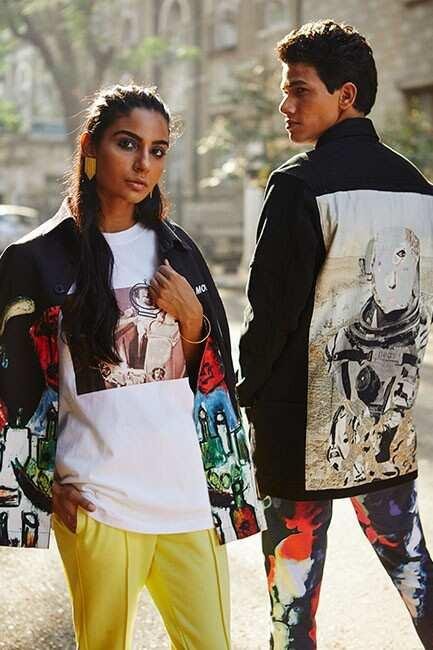
A used shirt is capable of forming a streetwear outfit.
Old denim can be paired with modern footwear.
Thrifting isn’t an independent fashion style.
It is a method of obtaining clothing.
10. Thrift Shopping Can Turn Into a Community
People find fashion more enjoyable if they share it.
People can discover sellers, swap ideas about styling, and get inspiration by taking part in online thrift communities.
Young people have the opportunity to become sellers by giving their unused clothes a new life.
The research carried out by WRI indicates that existing business models can provide opportunities for individuals to act as both buyers and sellers of secondhand clothing.
It makes thrifting an activity that goes beyond shopping.
It may be incorporated into a circular fashion community.
How DL-91 Can Help the New Generation
For India’s younger generation, the problem is usually finding fashion that seems affordable, different, and relevant to their own style rather than just going along with the trends available on a large scale.
DL-91 is intended to be included in that evolving fashion experience by assisting young shoppers in exploring styles which enable greater individuality and experimentation.
The object isn’t to tell members of Gen Z what clothes to wear.
That way, they will have more means of finding out what they like.
What will the future be like?
The secondhand clothing market in India is expected to grow significantly.
According to Outlook Money, India’s used clothing market was expected to grow from $5.20 billion in 2025 to $17.90 billion by 2031, which represents a projected annual growth rate of 22.8%.
If that level of projection is reached, thrift fashion could become a great deal more mainstream.
The future might see advancements in authentication, better product discovery, the introduction of digital wardrobes, more effective resale tools, and stronger circular-fashion communities.
Conclusion
The fact that Gen Z in India has a fondness for online thrift stores doesn’t stem from a single simple cause.
This is due to a mix of low cost, individuality, the appeal of vintage culture, the ease of discovering clothes through digital means, and increasing awareness regarding the way people consume clothing.
Thrift shopping can cause fashion to become something that is discovered rather than simply bought on a routine basis for young Indians.
Maybe that’s the main reason why thrift fashion is becoming so interesting—when everybody can purchase the same new trend, doesn’t it make finding something that’s uniquely yours all the more exciting?
Leave a Reply