

Introduction
Thrifting looks easy from the outside.
You walk into a store. Browse a few racks. Find a cool jacket. Pay a small amount. Leave happy.
At least that’s how many people imagine it.
Reality is a little different.
Most experienced thrift shoppers have made plenty of mistakes. Some bought clothes that never fit. Others filled their closets with items they never wore. And many have gone home with what seemed like amazing bargains, only to discover stains, tears, or hidden damage later.
It happens.
The good news is that every mistake teaches something valuable.
Whether you’re new to thrifting or already enjoy hunting for second-hand treasures, understanding the most common thrifting mistakes can save you time, money, and frustration.
Let’s explore what they are and how to avoid them.
What Are the Most Common Thrifting Mistakes?
Many thrifting mistakes happen because shoppers get excited.
And honestly, that’s understandable.
Finding unique clothing at affordable prices can feel like striking gold.
But excitement sometimes clouds judgment.
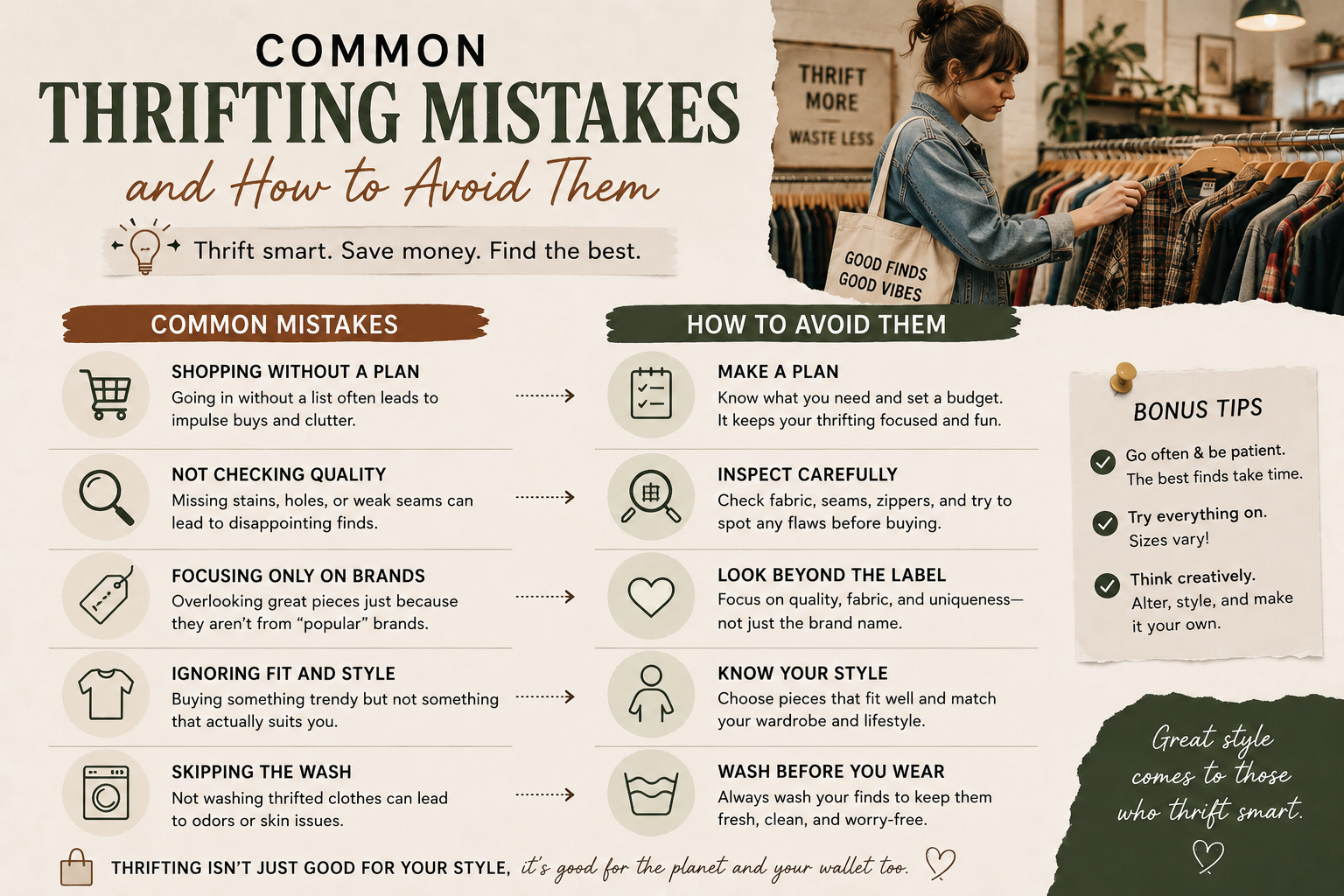
Common mistakes include:
- Buying without inspecting
- Ignoring fit
- Shopping without a plan
- Purchasing damaged items
- Focusing only on brands
- Overspending
- Following trends blindly
- Skipping fabric checks
Most of these mistakes are preventable.
A little awareness goes a long way.
Why Do New Thrifters Buy Too Much?
Picture this.
A first-time thrift shopper walks into a store and sees shirts for a fraction of retail prices.
some pay 5k or 10k
Sometimes even less.
Everything suddenly feels like a bargain.
Before they know it, their cart is full.
The problem?
Cheap isn’t always valuable.
Many people buy thrifted clothing simply because it’s inexpensive. Later, those same clothes sit untouched in a closet.
Months pass.
Nothing gets worn.
The excitement disappears.
The clutter remains.
How to Avoid This Mistake
Before purchasing, ask yourself:
- Would I buy this at a higher price?
- Can I create outfits with it?
- Will I wear it regularly?
If the answer is no, put it back.
Simple.
Who Often Makes the Mistake of Ignoring Fit?
Almost everyone.
Even experienced thrifters.
One of the biggest mistakes is buying clothes based on potential rather than reality.
People tell themselves:
“It almost fits.”
“I’ll lose weight.”
“I’ll get it tailored.”
Sometimes that works.
Usually, it doesn’t.
A garment that doesn’t fit properly often stays unworn.
No matter how beautiful it looks.
How to Avoid This Mistake
Always try items on when possible.
Don’t trust size labels alone.
Vintage sizing differs from modern sizing.
A medium from twenty years ago may fit like a small today.
Your eyes can be fooled.
The fitting room rarely lies.
Where Do Most Shoppers Forget to Inspect Clothing?
The hidden areas.
Everyone checks the front.
Few check the details.
That’s where problems hide.
Look closely at:
Collars
Collars often show wear first.
Check for:
- Fraying
- Discoloration
- Fabric thinning
Underarms
Sweat stains and odors commonly appear here.
Many shoppers completely miss them.
Cuffs
Sleeves reveal heavy use.
Inspect carefully.
Seams
Weak stitching may indicate future problems.
Tiny flaws become larger ones quickly.
A two-minute inspection can prevent a disappointing purchase.
When Should You Walk Away From a “Great Deal”?
Immediately.
If the damage outweighs the value.
Many thrift shoppers convince themselves they can fix everything.
They can’t.
At least not always.
Signs You Should Walk Away
- Large holes
- Permanent stains
- Missing essential parts
- Strong mildew odors
- Broken zippers requiring replacement
Some repairs are simple.
Others become expensive projects.
Know the difference.
How Does Shopping Without a Plan Cause Problems?
Imagine entering a thrift store without any goal.
You wander.
You browse.
You grab random pieces.
An hour later, you own three jackets, two graphic tees, and a pair of pants that match absolutely nothing.
It happens more often than people admit.
How to Avoid This Mistake
Create a shopping objective before visiting.
Ask yourself:
- Do I need jeans?
- Am I looking for jackets?
- Do I want workwear?
- Am I searching for vintage pieces?
A plan creates focus.
Focus creates better decisions.
What Happens When You Focus Only on Brands?
This is a surprisingly common mistake.
Many shoppers hunt exclusively for famous labels.
They ignore everything else.
That’s unfortunate.
Because some of the best thrift finds don’t carry recognizable logos.
A high-quality unknown brand can outperform a popular designer label.
Quality matters.
Construction matters.
Fabric matters.
Brand names are only part of the story.
How to Avoid This Mistake
Judge the garment first.
Examine:
- Material
- Stitching
- Durability
- Fit
Then consider the brand.
Not the other way around.
Why Is Ignoring Fabric Quality a Costly Error?
Fabric determines how a garment feels.
How it wears.
How long it lasts.
Yet many shoppers never check it.
They see a nice design and immediately head to checkout.
Bad idea.
Common High-Quality Fabrics
- Cotton
- Wool
- Linen
- Cashmere
- Silk
- Leather
These materials generally age better and offer greater durability.
Cheap synthetic fabrics may look attractive initially but often deteriorate quickly.
Touch the garment.
Feel the texture.
Your hands can tell you a lot.
Who Makes the Mistake of Following Trends Blindly?
Fashion trends influence everyone.
Even experienced shoppers.
A certain style becomes popular online and suddenly everyone starts searching for it.
The problem?
Not every trend suits every person.
Some trendy purchases become regrets within months.
How to Avoid This Mistake
Buy pieces that fit your personal style.
Not just current trends.
Timeless clothing often provides more value.
Fashion changes.
Personal style evolves more slowly.
Choose wisely.
Where Do Hidden Costs Appear in Thrifting?
Many people forget to calculate additional expenses.
They focus only on the purchase price.
But there can be hidden costs.
For example:
- Dry cleaning
- Tailoring
- Repairs
- Replacement buttons
- Fabric restoration
That ten-dollar jacket might eventually cost thirty dollars.
Or fifty.
Always consider total cost.
Not just initial price.
What Mistakes Do People Make With Vintage Clothing?
Vintage clothing is exciting.
Rare.
Unique.
Full of character.
But it isn’t perfect.
Many shoppers assume all vintage pieces are valuable.
That’s not true.
Age alone doesn’t create value.
Condition matters.
Quality matters.
Demand matters.
How to Avoid This Mistake
Research before buying.
Learn about:
- Vintage labels
- Manufacturing eras
- Fabric types
- Popular styles
Knowledge helps separate genuine treasures from ordinary old clothing.
How Can Impatience Hurt Your Thrifting Success?
Patience is one of the most important thrifting skills.
Without it, mistakes multiply.
Many shoppers rush.
They scan racks too quickly.
They overlook quality pieces.
Or they buy something simply because they haven’t found anything else.
Neither approach works well.
How to Avoid This Mistake
Slow down.
Browse carefully.
Inspect thoroughly.
Some of the best thrift finds are hidden between dozens of ordinary items.
Good things often require time.
Why Do People Ignore Their Existing Wardrobe?
This mistake creates clutter.
A shopper finds an amazing shirt.
Buys it.
Then realizes it doesn’t match anything they already own.
Now it sits unused.
Taking up space.
How to Avoid This Mistake
Before purchasing, imagine at least three outfits using the item.
If you struggle to create combinations, reconsider.
Versatility increases value.
Every time.
What Happens When You Shop Emotionally?
Emotional shopping affects thrift stores just as much as retail stores.
Bad day?
Buy something.
Stress at work?
Buy something.
Feeling bored?
Buy something.
The result is often unnecessary purchases.
How to Avoid This Mistake
Pause before buying.
Ask yourself:
“Do I genuinely need this?”
Or
“Am I simply reacting emotionally?”
The answer is usually obvious.
If you’re honest.
Who Benefits Most From Learning These Lessons?
Everyone.
Beginners avoid costly mistakes.
Experienced shoppers refine their skills.
Collectors improve their selections.
Fashion enthusiasts build stronger wardrobes.
Thrifting becomes more enjoyable when mistakes become less frequent.
And every smart purchase increases confidence.
How Can You Become a Better Thrifter Over Time?
Practice.
Observation.
Patience.
Those three things matter most.
Visit stores regularly.
Study fabrics.
Learn about brands.
Examine garment construction.
Ask questions.
Make mistakes.
Then learn from them.
Every successful thrifter started exactly the same way.
With curiosity and a willingness to improve.
Conclusion
Thrifting is one of the most rewarding ways to shop, but it comes with challenges. Many people buy too much, ignore fit, overlook damage, chase brands, or shop without a clear plan. These mistakes are common. Very common.
Fortunately, they are also avoidable.
Inspect every item carefully. Focus on quality rather than hype. Pay attention to fabric, fit, and condition. Consider how each piece fits into your existing wardrobe.
Most importantly, be patient.
The best thrift finds rarely appear instantly. They reveal themselves to shoppers who take their time and know what they’re looking for.
Avoid the common mistakes, trust your instincts, and enjoy the hunt.
Because somewhere in a thrift store, right now, your next favorite piece is probably waiting to be discovered.
Leave a Reply