

Introduction
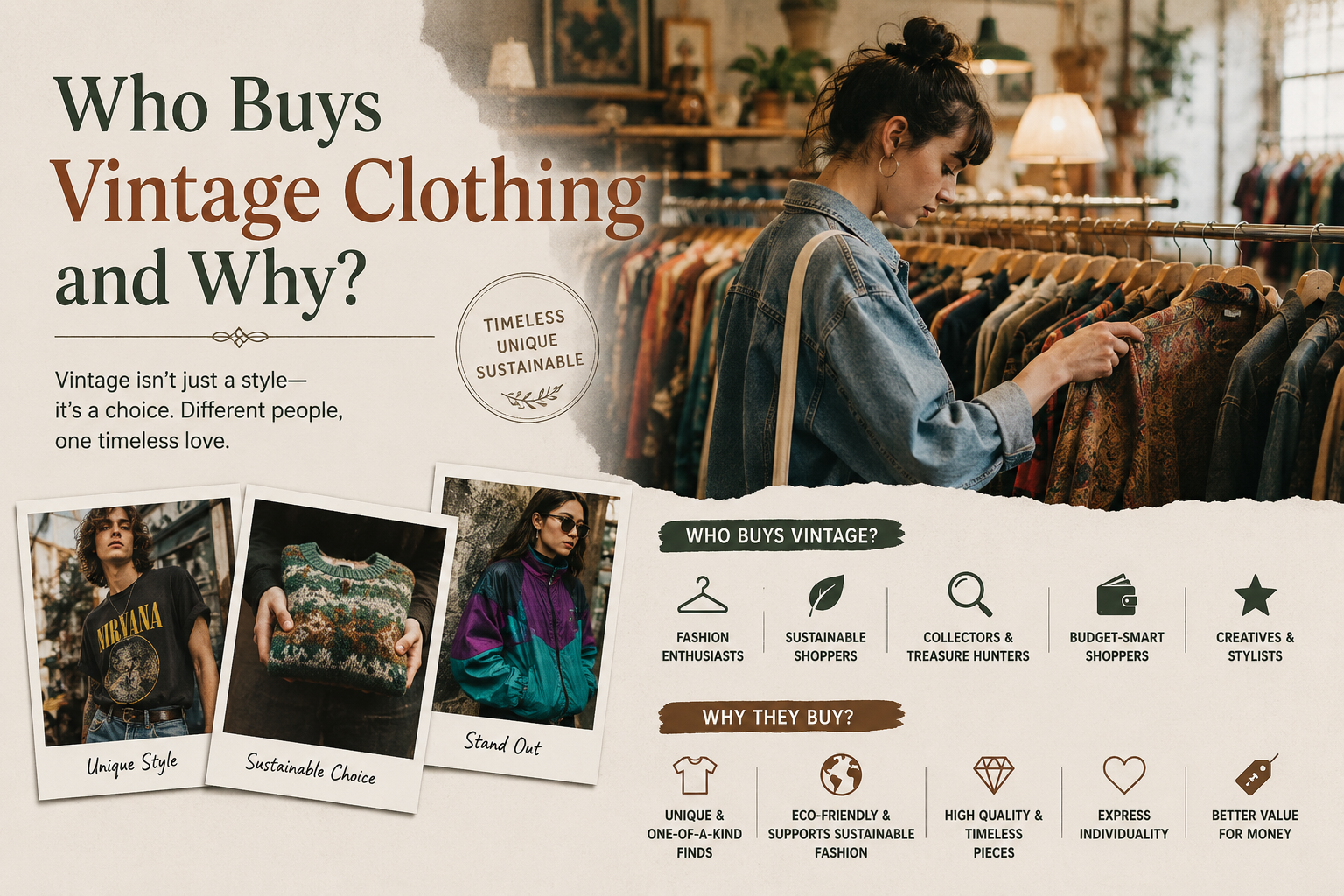
A teenager walks into a vintage store looking for an oversized denim jacket. A fashion designer searches for inspiration from the past. A collector spends hours hunting for a rare band T-shirt from the 1980s.
Three completely different people.
One common interest.
Vintage clothing.
For many years, vintage fashion was considered a niche hobby. Something only collectors or fashion experts cared about. Today, that’s no longer true. Vintage clothing has become one of the fastest-growing segments of the fashion world.
People from all backgrounds are embracing older garments and giving them new life.
But who exactly buys vintage clothing? And why are so many shoppers choosing old pieces instead of brand-new fashion?
Let’s find out.
What Is Vintage Clothing?
Before understanding who buys vintage clothing, it’s important to understand what vintage actually means.
Generally speaking, vintage clothing refers to garments that are at least 20 years old and represent the styles of a particular era.
These may include:
- Vintage denim jackets
- Graphic T-shirts
- Leather coats
- Dresses
- Sportswear
- Military-inspired clothing
- Designer garments
- Accessories
Vintage clothing is different from regular second-hand clothing.
Not every used garment is vintage.
Age matters.
History matters.
Character matters.
That’s part of what makes vintage fashion special.
Why Has Vintage Clothing Become So Popular?
Vintage fashion has experienced enormous growth over the last decade.
The reasons are surprisingly varied.
Some people want unique style.
Others care about sustainability.
Many simply enjoy the excitement of finding rare pieces.
And honestly, that’s understandable.
Walking into a vintage store feels different from entering a regular retail shop.
There is mystery.
Possibility.
A sense of discovery.
You never know what might be waiting on the next rack.
Who Are Fashion Enthusiasts That Buy Vintage Clothing?
Fashion lovers make up a large portion of vintage shoppers.
For them, clothing is more than fabric.
It’s self-expression.
A way to stand out.
Modern fashion often follows similar trends.
The same colors.
The same silhouettes.
The same styles.
Vintage clothing offers something different.
A vintage varsity jacket from the 1990s tells a story.
A faded band T-shirt carries personality.
A retro windbreaker brings character.
Fashion enthusiasts often seek items that cannot be easily replicated by fast-fashion brands.
Originality matters.
And vintage delivers it.
Why Do Young Adults Love Vintage Fashion?
Young consumers have played a major role in the growth of vintage clothing.
Particularly members of Gen Z.
Many young shoppers are actively moving away from mass-produced fashion.
They want individuality.
They want authenticity.
They want something that feels real.
Social media has helped fuel this movement.
Vintage outfits regularly appear on:
- TikTok
- YouTube
A single post featuring a unique vintage jacket can inspire thousands of people.
Suddenly everyone starts searching for similar pieces.
The demand grows.
The trend continues.
Who Buys Vintage Clothing for Sustainability Reasons?
Environmental awareness has become an important factor in modern shopping habits.
Many consumers understand the environmental impact of clothing production.
New garments require:
- Water
- Energy
- Raw materials
- Transportation
Vintage clothing already exists.
No additional manufacturing is required.
For environmentally conscious shoppers, buying vintage feels like a practical solution.
One garment receives a second life.
Less waste enters landfills.
Small actions matter.
Even if they seem insignificant at first.
What Makes Collectors Interested in Vintage Clothing?
Collectors approach vintage fashion differently.
For them, clothing becomes history.
A collectible.
An investment.
Sometimes both.
They search for:
- Rare sportswear
- Vintage denim
- Concert T-shirts
- Designer archives
- Limited-edition pieces
Finding a rare item can feel like discovering buried treasure.
Some collectors spend years searching for specific garments.
Years.
Imagine that.
The excitement isn’t just about ownership.
It’s about the hunt.
Where Do Celebrities and Influencers Buy Vintage Clothing?
Many celebrities openly embrace vintage fashion.
Not because they can’t afford new clothing.
Quite the opposite.
They choose vintage because it offers exclusivity.
Unique pieces help create memorable looks.
Stylists frequently source vintage garments for:
- Red carpet appearances
- Magazine photoshoots
- Music videos
- Social media content
Vintage clothing helps celebrities avoid looking identical to everyone else.
Uniqueness has value.
Sometimes tremendous value.
Why Do Students Buy Vintage Clothing?
Students often face financial limitations.
Tuition.
Books.
Housing.
Expenses add up quickly.
Vintage clothing offers an affordable alternative.
A student can often purchase high-quality garments at a fraction of retail prices.
The savings matter.
But price isn’t the only factor.
Many students enjoy experimenting with fashion.
Vintage clothing makes experimentation less risky.
If an outfit doesn’t work, the financial loss is usually minimal.
That freedom encourages creativity.
Who Buys Vintage Clothing for Business Purposes?
Not every vintage shopper buys for personal use.
Some buy for business.
Resellers have become a major part of the vintage clothing market.
Their process is simple.
Find valuable items.
Restore or clean them.
Sell them at higher prices.
Successful resellers develop expertise in:
- Brand identification
- Vintage labels
- Market trends
- Garment condition
Knowledge becomes profit.
The better they understand vintage clothing, the better opportunities they discover.
What Types of Vintage Clothing Are Most Popular?
Demand changes over time.
However, certain categories remain consistently desirable.
Vintage Denim
Denim ages beautifully.
Fading creates character.
Wear creates uniqueness.
No two vintage pairs look exactly alike.
Graphic T-Shirts
Vintage graphic tees have become highly collectible.
Especially those featuring:
- Music bands
- Sports teams
- Movies
- Pop culture references
Outerwear
Vintage jackets continue attracting buyers.
Leather jackets.
Bomber jackets.
Varsity jackets.
The list goes on.
Sportswear
Retro sportswear remains extremely popular.
Nostalgia plays a major role.
People love reconnecting with past eras.
When Do People Usually Start Buying Vintage Clothing?
Interestingly, many shoppers don’t plan on becoming vintage enthusiasts.
It often starts accidentally.
A person finds one unique piece.
Maybe a jacket.
Maybe a shirt.
They wear it.
Receive compliments.
Feel confident.
Then they want another piece.
And another.
Before long, vintage fashion becomes part of their personal style.
One purchase leads to another.
The journey happens naturally.
How Does Vintage Clothing Help People Express Individuality?
Fashion has always been connected to identity.
People use clothing to communicate who they are.
Vintage fashion strengthens that connection.
Because vintage pieces are often rare, they help create unique outfits.
You aren’t wearing what everyone else bought last weekend.
You’re wearing something with history.
Something uncommon.
Something personal.
That distinction matters to many consumers.
Especially in a world filled with mass production.
Why Do Creative Professionals Buy Vintage Clothing?
Creative industries often embrace vintage fashion.
Artists.
Designers.
Photographers.
Musicians.
Writers.
Many creative individuals find inspiration in older garments.
Vintage clothing represents different eras, cultures, and design philosophies.
A jacket from the 1970s can spark ideas.
A shirt from the 1990s can influence a project.
Creativity often thrives on unexpected discoveries.
Vintage stores are full of them.
What Psychological Appeal Does Vintage Clothing Have?
The emotional appeal of vintage fashion shouldn’t be ignored.
Many garments evoke nostalgia.
Even for people who never lived through the era they represent.
That’s fascinating.
A young shopper may feel connected to the 1980s through a vintage windbreaker.
A collector may remember childhood memories associated with a sports team logo.
Clothing becomes emotional.
Not just functional.
And emotional products tend to create stronger connections.
Who Buys Vintage Clothing Instead of Luxury Fashion?
Surprisingly, some consumers choose vintage over luxury retail.
Not because luxury brands lack quality.
But because vintage often offers greater uniqueness.
Anyone can buy a newly released luxury item.
Finding a rare vintage piece requires effort.
Patience.
Knowledge.
The experience feels more rewarding.
Some shoppers value that process more than the brand itself.
How Does Social Media Influence Vintage Clothing Buyers?
Social media has transformed vintage fashion dramatically.
Platforms showcase:
- Styling ideas
- Rare finds
- Fashion inspiration
- Vintage collections
People see unique outfits and become curious.
Curiosity turns into interest.
Interest turns into purchases.
The cycle continues.
Influencers and content creators have introduced vintage clothing to audiences who may never have considered it before.
The impact has been enormous.
Why Is Vintage Clothing More Than Just Fashion?
Because every piece tells a story.
A jacket may have travelled across countries.
A T-shirt may represent a concert that happened decades ago.
A pair of jeans may reflect manufacturing techniques no longer used today.
Vintage clothing preserves history.
Not in museums.
In everyday life.
That’s powerful.
People aren’t simply buying garments.
They’re buying experiences.
Memories.
Stories.
Connections to the past.
What Does the Future Hold for Vintage Clothing Buyers?
The future looks promising.
Consumers continue seeking sustainable alternatives.
Unique fashion remains desirable.
Online vintage marketplaces continue growing.
New generations are embracing second-hand fashion earlier than ever before.
All signs suggest demand will continue increasing.
Vintage clothing is no longer a niche market.
It’s becoming a permanent part of modern fashion culture.
And its popularity shows no signs of slowing down.
Conclusion
Vintage clothing attracts a remarkably diverse group of buyers. Fashion enthusiasts seek originality. Students appreciate affordability. Collectors hunt for rare treasures. Environmentally conscious shoppers support sustainability. Resellers build businesses. Creative professionals find inspiration.
Different motivations.
Same destination.
Vintage fashion continues growing because it offers something modern retail often struggles to provide.
Authenticity.
Character.
History.
And individuality.
Every vintage garment carries a story. Every purchase becomes part of a new story. That’s what makes vintage clothing more than just fashion.
It’s a connection between the past and the present.
And for millions of people around the world, that’s exactly what makes it worth buying.
Leave a Reply