

Introduction
A few years ago, buying clothes was simple.
Need a shirt? Buy a shirt.
Need jeans? Buy jeans.
Most people rarely thought about where their clothing came from, how it was made, or what happened to it after they stopped wearing it.
Things have changed.
Today, more people are asking questions.
Important questions.
Questions about waste. About quality. About environmental impact. About how fashion affects the world around us.
And honestly, that’s a good thing.
The average person buys more clothing than previous generations. Yet many garments are worn only a handful of times before being forgotten in closets or thrown away.
That cycle creates problems.
Big ones.
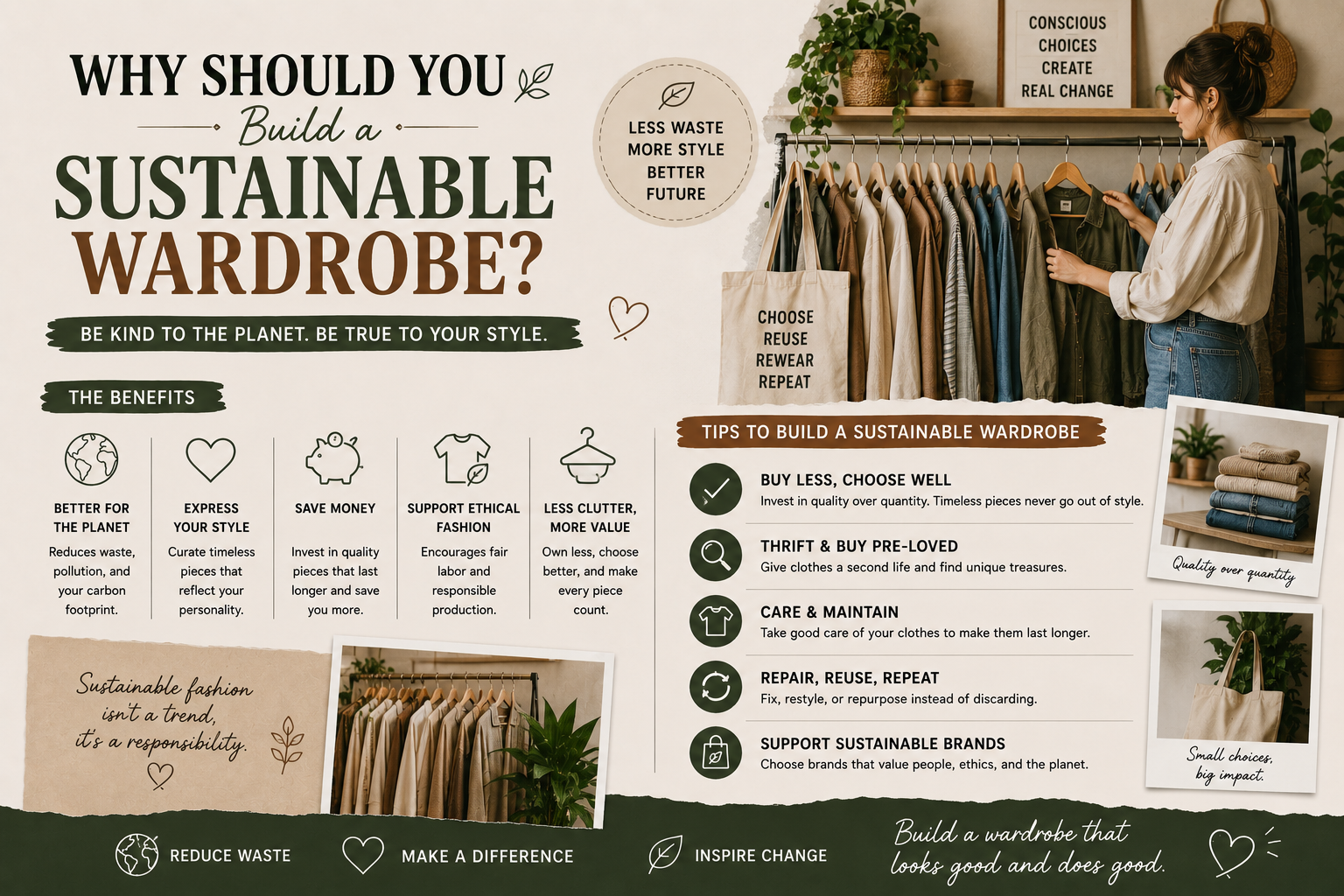
A sustainable wardrobe offers a different approach. Instead of constantly replacing clothing, it focuses on thoughtful purchases, long-lasting pieces, and responsible consumption.
It isn’t about perfection.
It’s about making better choices.
One garment at a time.
Let’s explore why building a sustainable wardrobe matters and how it can benefit both you and the planet.
What Is a Sustainable Wardrobe?
A sustainable wardrobe is a collection of clothing built around quality, longevity, and mindful purchasing.
Rather than buying large amounts of fast-fashion items, people focus on pieces they genuinely need and will actually wear.
The goal is simple.
Buy less.
Wear more.
Waste less.
A sustainable wardrobe may include:
- Thrifted clothing
- Vintage fashion
- Durable basics
- Ethically made garments
- Timeless wardrobe staples
It’s not about following strict rules.
It’s about creating a wardrobe that works for your lifestyle while reducing unnecessary waste.
Why Is Fast Fashion Creating So Much Waste?
Walk into many clothing stores and you’ll notice something.
New collections appear constantly.
Every season.
Sometimes every few weeks.
The message is clear.
Buy more.
Replace more.
Repeat.
But there’s a problem.
Many garments are designed for short-term use.
Some lose shape quickly.
Others fade after repeated washing.
Some simply fall out of trend.
As a result, enormous amounts of clothing end up discarded.
Perfectly wearable items often get thrown away simply because something newer arrived.
That’s unfortunate.
And largely avoidable.
Who Benefits From Building a Sustainable Wardrobe?
The answer is surprisingly broad.
Almost everyone.
Consumers
People often save money over time by purchasing fewer, higher-quality items.
The Environment
Less clothing waste means fewer resources are consumed unnecessarily.
Future Generations
More responsible consumption today helps reduce environmental pressure tomorrow.
Small Businesses
Many sustainable shoppers support local thrift stores and independent sellers.
Everyone gains something.
That’s rare.
What Are the Financial Benefits of a Sustainable Wardrobe?
Many people assume sustainability is expensive.
Not necessarily.
In fact, it can save money.
Imagine buying a cheap T-shirt that lasts six months.
Then buying another.
And another.
And another.
The costs add up.
Now imagine purchasing a higher-quality shirt that lasts several years.
Suddenly the math changes.
Sustainable Shopping Often Includes
- Buying fewer items
- Choosing better quality
- Thrifting clothing
- Repairing garments
- Reusing existing pieces
The result?
Less spending over time.
Not immediately always.
But eventually.
Where Can You Start Building a Sustainable Wardrobe?
You don’t need to replace everything overnight.
Actually, you shouldn’t.
Start where you are.
Check Your Existing Closet
Many people already own more clothing than they realize.
Rediscover forgotten items.
Experiment with new combinations.
Use what you already have.
Visit Thrift Stores
Second-hand shopping extends the life of existing garments.
That’s one of the easiest sustainable choices available.
Support Quality Brands
When buying new clothing, prioritize durability over quantity.
Quality matters.
A lot.
Why Is Thrifting Important for Sustainability?
Thrifting is one of the most effective ways to reduce fashion waste.
Simple.
The garment already exists.
No additional manufacturing required.
No extra production resources consumed.
The clothing receives another opportunity to be worn.
Another chapter.
Another story.
And honestly, thrift stores often contain incredible pieces.
Vintage denim.
Classic jackets.
Unique accessories.
Sometimes better than what you’ll find in regular retail stores.
Who Is Leading the Sustainable Fashion Movement?
The movement includes people from many backgrounds.
Students.
Designers.
Environmental advocates.
Fashion enthusiasts.
Even celebrities.
More consumers are becoming aware of how their purchasing habits affect the world.
Awareness creates change.
Small changes become larger movements.
That’s usually how progress happens.
Not all at once.
Gradually.
What Clothing Items Should You Prioritize?
Some garments provide more value because they’re versatile.
These pieces form the foundation of a sustainable wardrobe.
Quality Jeans
Durable.
Practical.
Easy to style.
Neutral T-Shirts
Simple colors work with countless outfits.
Jackets
A good jacket can last years.
Sometimes decades.
Comfortable Footwear
Shoes matter.
Probably more than people think.
Daily comfort is important.
How Does a Sustainable Wardrobe Reduce Stress?
This benefit surprises many people.
A smaller, more intentional wardrobe often makes getting dressed easier.
Less clutter.
Fewer unnecessary choices.
More clarity.
Imagine opening your closet and actually liking everything inside.
That’s powerful.
Instead of sorting through dozens of unworn garments, you focus on pieces you genuinely enjoy wearing.
Decision fatigue decreases.
Life becomes simpler.
At least slightly.
And sometimes slight improvements matter most.
Why Is Quality More Important Than Quantity?
Because quantity often creates clutter.
Quality creates value.
A closet full of cheap garments may look impressive at first.
But appearances can be misleading.
If items wear out quickly, require constant replacement, or remain unworn, their value becomes questionable.
Quality clothing often provides:
- Better durability
- Improved comfort
- Longer lifespan
- Greater versatility
Fewer pieces.
Better performance.
That’s the goal.
Where Does Vintage Fashion Fit Into Sustainability?
Vintage clothing plays a major role.
Every vintage garment represents clothing that avoided becoming waste.
Instead of sitting unused, it finds a new owner.
A new purpose.
A second life.
Vintage fashion also offers individuality.
Many pieces feature designs unavailable in modern stores.
That’s another advantage.
Sustainability doesn’t have to be boring.
Quite the opposite.
What Habits Help Create a Sustainable Wardrobe?
Building a sustainable wardrobe involves daily decisions.
Not dramatic changes.
Small habits matter.
Ask Questions Before Buying
Do I need this?
Will I wear it regularly?
Does it fit my lifestyle?
Care for Clothing Properly
Wash thoughtfully.
Store carefully.
Repair when possible.
Avoid Impulse Purchases
Excitement fades.
Good decisions last.
Simple principle.
Easy to forget sometimes.
Who Should Consider Repairing Clothing?
Everyone.
At least occasionally.
Modern culture often encourages replacement.
Repair offers an alternative.
A missing button doesn’t require replacing a shirt.
A small tear doesn’t necessarily end a garment’s life.
Basic repairs can significantly extend clothing longevity.
And honestly, learning simple repair skills isn’t difficult.
It just takes practice.
Why Are Timeless Styles Better Than Temporary Trends?
Fashion trends move quickly.
Sometimes ridiculously quickly.
One month something feels essential.
Six months later nobody talks about it.
Timeless styles offer stability.
Examples include:
- Denim jackets
- White shirts
- Neutral sweaters
- Classic outerwear
These pieces remain useful regardless of changing trends.
That’s valuable.
Very valuable.
How Can Sustainable Fashion Still Be Stylish?
A common misconception is that sustainability limits creativity.
Not true.
Sustainable wardrobes can be incredibly fashionable.
Perhaps even more fashionable.
Why?
Because they encourage intentional styling.
People learn to mix and match.
Layer creatively.
Use accessories thoughtfully.
Style becomes more personal.
Less dependent on constant shopping.
More dependent on imagination.
That’s a good trade.
What Common Mistakes Should You Avoid?
Everyone makes mistakes while building better habits.
That’s normal.
Buying Sustainable Products You Don’t Need
Unnecessary purchases remain unnecessary.
Even sustainable ones.
Ignoring Quality
Not all clothing is created equally.
Inspect carefully.
Chasing Every Trend
Sustainability and trend-chasing rarely work well together.
Expecting Perfection
Progress matters more than perfection.
Always.
Where Is Sustainable Fashion Headed in the Future?
The future looks promising.
Consumers are becoming more informed.
Second-hand fashion continues growing.
Vintage clothing remains popular.
Brands increasingly discuss environmental responsibility.
Challenges still exist.
Of course.
But awareness is expanding.
And awareness creates opportunities for improvement.
The fashion industry is evolving.
Slowly perhaps.
But definitely evolving.
Why Does Every Small Choice Matter?
Because large changes begin with small decisions.
One thrifted jacket.
One repaired pair of jeans.
One thoughtful purchase.
Individually these actions seem minor.
Collectively they create impact.
That’s how sustainable habits work.
Not through dramatic gestures.
Through consistency.
Day after day.
Choice after choice.
Conclusion
Building a sustainable wardrobe is about more than fashion. It’s about making thoughtful decisions that benefit both your personal style and the world around you. By focusing on quality, durability, versatility, and responsible shopping habits, you can create a wardrobe that lasts longer, wastes less, and feels more meaningful.
Thrifting, vintage shopping, repairing garments, and choosing timeless pieces all contribute to a more sustainable approach to fashion. These practices not only reduce environmental impact but often save money and encourage greater creativity in how you dress.
You don’t need to transform your wardrobe overnight.
Start small.
Make better choices when possible.
Wear what you love.
Take care of what you own.
Because sustainability isn’t about having a perfect wardrobe.
It’s about building a smarter one.
Leave a Reply