

Introduction
A few years ago, many people viewed thrift shopping as something only bargain hunters did. It was often associated with saving money and little else.
Things have changed.
Today, thrift shopping has become a global trend. Fashion lovers, students, collectors, influencers, and even celebrities regularly search for second-hand treasures. What was once considered an alternative way to shop has become a lifestyle for millions.
Walk into a thrift store and you’ll quickly understand why.
Rows of unique clothing. Vintage jackets. Rare graphic tees. Designer pieces. Unexpected finds hiding between ordinary items.
Every visit feels different.
Every rack tells a story.
But what exactly is thrift shopping? Why are so many people choosing second-hand fashion over traditional retail stores?
Let’s explore.
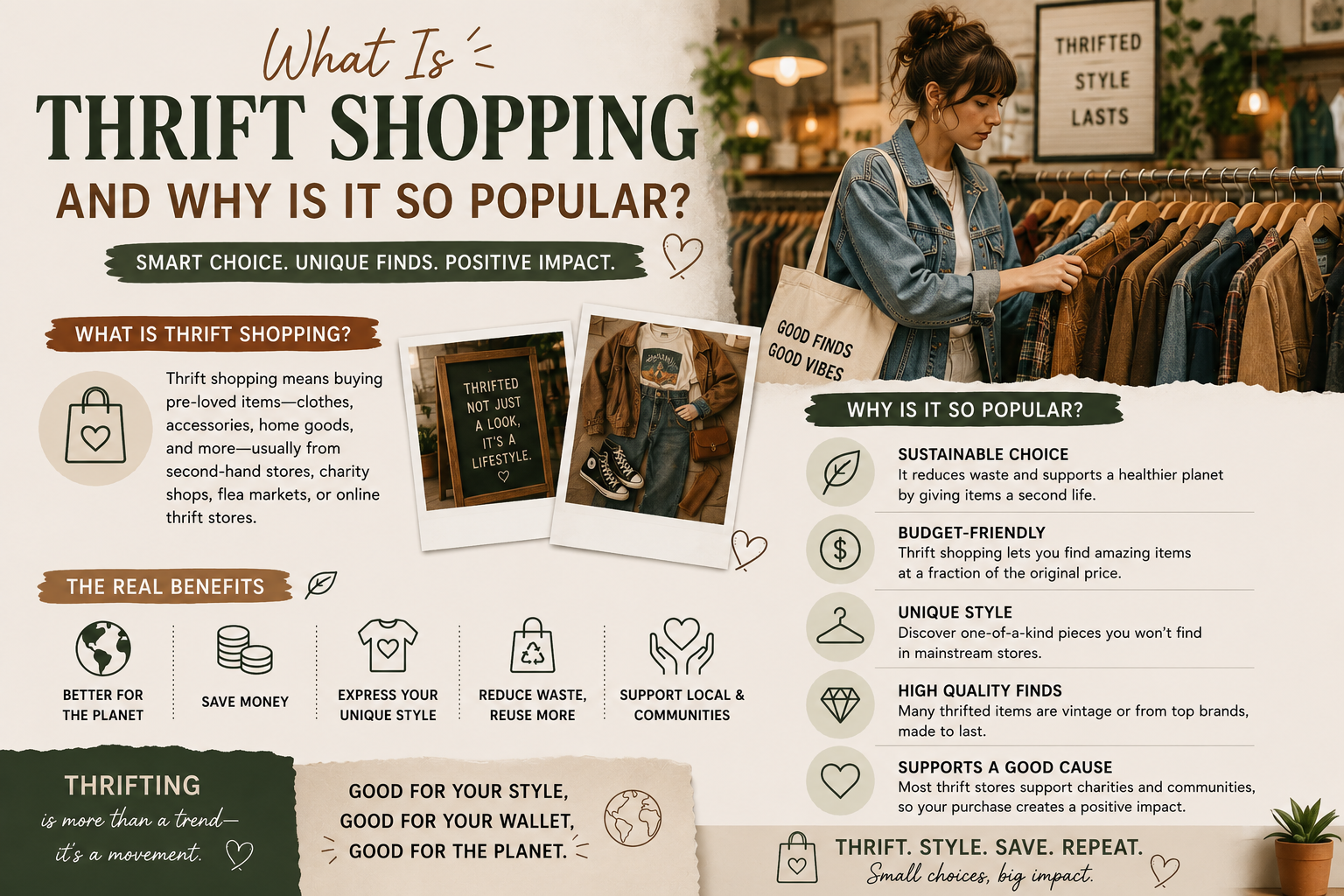
What Is Thrift Shopping?
Thrift shopping refers to purchasing second-hand items that have been previously owned and later donated, resold, or traded.
These items are usually sold at significantly lower prices than new products.
Thrift stores often carry:
- Clothing
- Shoes
- Accessories
- Bags
- Home décor
- Books
- Furniture
- Collectibles
The inventory changes constantly.
Unlike traditional retail stores, thrift shops rarely stock identical items in large quantities.
That’s part of the appeal.
When you find something special, it may be the only one available.
Once it’s gone, it’s gone.
Why Is Thrift Shopping Becoming More Popular?
Several factors have contributed to the rise of thrifting.
Some people start because they want to save money.
Others become interested because of sustainability.
Many simply enjoy the excitement.
It’s a mix of reasons.
And that’s what makes thrifting unique.
Affordable Prices
Let’s be honest.
Everyone likes saving money.
A jacket that costs $120 in a retail store might appear in a thrift shop for a fraction of the price.
The value can be incredible.
Especially for students and budget-conscious shoppers.
Unique Fashion
Nobody wants to look exactly like everyone else.
Fast fashion often produces identical styles.
Thrift stores offer something different.
Something personal.
Something rare.
You might discover a vintage denim jacket that no one else in your neighborhood owns.
That feeling is hard to beat.
Environmental Awareness
More consumers are becoming aware of fashion waste.
Millions of garments end up in landfills every year.
Thrifting helps extend the life of existing clothing.
It’s a small step.
But many small steps create meaningful change.
Who Shops at Thrift Stores?
The short answer?
Almost everyone.
The stereotype that thrift stores are only for people on tight budgets is outdated.
Today’s thrift shoppers include:
Students
Students often appreciate affordable fashion.
Thrifting allows them to experiment with different styles without spending large amounts of money.
Fashion Enthusiasts
Fashion lovers enjoy discovering unique pieces.
Vintage items. Designer labels. Limited-edition garments.
The hunt becomes part of the fun.
Collectors
Some shoppers specifically search for:
- Vintage sportswear
- Band T-shirts
- Designer pieces
- Retro accessories
These items can sometimes become valuable collectibles.
Environmentally Conscious Consumers
Many people choose thrift shopping because it supports more sustainable consumption habits.
Less waste.
Less demand for new production.
A simple concept.
Where Can You Go Thrift Shopping?
There are more options than ever before.
Traditional Thrift Stores
These remain the most popular choice.
You can browse racks, examine fabrics, and try items on before purchasing.
Many shoppers enjoy the physical experience.
The treasure hunt feels real.
Charity Shops
Charity stores often receive donated goods and use profits to support various causes.
Shopping becomes a way to support communities while finding great items.
A win-win situation.
Online Thrift Stores
Online thrifting has grown rapidly.
People can now browse thousands of second-hand products from home.
Convenient.
Simple.
Dangerously addictive sometimes.
Flea Markets and Vintage Markets
These locations often feature unique vintage pieces that may not appear in traditional thrift stores.
Prices can vary, but the selection is often fascinating.
When Did Thrift Shopping Become Mainstream?
Second-hand shopping has existed for generations.
However, the modern thrift movement gained significant momentum during the last decade.
Social media played a major role.
Platforms like Instagram, YouTube, and TikTok introduced thrifting to new audiences.
People began sharing:
- Thrift hauls
- Vintage finds
- Styling ideas
- Before-and-after transformations
Suddenly, thrifting became trendy.
Not because it was cheap.
Because it was creative.
And authenticity never goes out of style.
How Does Thrift Shopping Work?
The process is simple.
Yet surprisingly exciting.
Step 1: Browse
Walk through the store.
Look carefully.
Patience matters.
Many treasures hide between ordinary items.
Step 2: Inspect
Always examine garments closely.
Check for:
- Stains
- Tears
- Missing buttons
- Fabric damage
Not every bargain is actually a bargain.
Step 3: Try On
Fit matters.
A lot.
Sizes vary significantly between brands and decades.
Always try items on when possible.
Step 4: Purchase
If the item fits well, feels comfortable, and offers value, you’ve probably found a good deal.
Congratulations.
The hunt paid off.
What Makes Thrift Shopping Different From Traditional Shopping?
Traditional retail stores focus on consistency.
Every customer sees similar inventory.
The experience is predictable.
Thrifting isn’t.
Every visit offers something different.
One day you find nothing.
The next day you discover a vintage leather jacket worth far more than its price tag.
That unpredictability creates excitement.
Many thrift shoppers compare it to treasure hunting.
And honestly, that comparison isn’t far from reality.
Why Do People Love Finding Hidden Gems?
Because humans enjoy discovery.
It’s part of our nature.
Imagine finding a premium wool coat for less than the price of lunch.
Or discovering a vintage band shirt you’ve been searching for years.
Moments like that feel rewarding.
Not because of the money alone.
Because of the story.
The effort.
The surprise.
Thrifting transforms shopping into an experience.
Not just a transaction.
What Are the Biggest Benefits of Thrift Shopping?
The benefits extend far beyond affordability.
Cost Savings
This is usually the first advantage people notice.
Second-hand clothing often costs significantly less than retail alternatives.
Sustainability
Buying used items helps reduce waste and extend product lifecycles.
Unique Style
Thrift stores offer individuality.
You aren’t limited to current retail trends.
Better Quality for Less
Older garments sometimes feature stronger materials and craftsmanship than modern alternatives.
Especially vintage pieces.
Fun and Adventure
Every visit feels different.
You never know what you’ll find.
That mystery keeps people coming back.
Who Can Benefit Most From Thrifting?
Nearly everyone can benefit.
But certain groups often gain the most value.
New Fashion Explorers
Trying different styles becomes affordable.
Mistakes become less expensive.
Experimentation becomes easier.
Small Business Owners
Many resale businesses source inventory through thrift stores.
A good eye can turn hidden gems into profitable opportunities.
Families
Children grow quickly.
Thrift shopping helps families manage clothing expenses more efficiently.
Vintage Enthusiasts
Some pieces simply cannot be found in modern stores.
Thrifting becomes the best option.
Sometimes the only option.
How Can Beginners Start Thrift Shopping Successfully?
Beginners often feel overwhelmed.
That’s normal.
Start small.
Have a Goal
Know what you’re looking for before entering.
A jacket.
Jeans.
Workwear.
Anything.
A goal provides focus.
Be Patient
Success rarely happens instantly.
The best finds often require time.
Learn About Fabrics
Quality materials matter.
Cotton, wool, linen, silk, and leather are excellent places to start.
Inspect Carefully
Always check condition before buying.
Always.
Even if the price seems irresistible.
What Challenges Come With Thrift Shopping?
No shopping method is perfect.
Thrifting has challenges too.
Limited Sizes
You may find the perfect item in the wrong size.
Frustrating.
Very frustrating.
Time Investment
Finding quality pieces requires effort.
You must browse.
Search.
Inspect.
Repeat.
Inconsistent Inventory
What you find today may not be there tomorrow.
Inventory changes constantly.
Occasional Imperfections
Some items show signs of wear.
Not every flaw is visible immediately.
Attention to detail helps.
Why Is Thrift Shopping More Than Just Saving Money?
This is where things get interesting.
People often start thrifting because they want to spend less.
But many continue for entirely different reasons.
The experience becomes enjoyable.
The discoveries become memorable.
The stories become valuable.
A vintage jacket isn’t just clothing.
It’s history.
A graphic tee isn’t just fabric.
It’s culture.
Every item has lived a life before reaching your hands.
That’s something retail stores can’t replicate.
What Does the Future of Thrift Shopping Look Like?
The future appears bright.
More consumers are embracing sustainable fashion.
Online resale platforms continue growing.
Vintage clothing remains highly desirable.
Young shoppers increasingly value uniqueness over mass production.
All signs suggest that thrift shopping will continue expanding.
Perhaps even faster than before.
Fashion trends change.
Consumer habits evolve.
But the appeal of finding something special at an incredible value seems timeless.
Conclusion
Thrift shopping is the practice of buying second-hand items, but it has become much more than that. It’s a way to save money, discover unique fashion, reduce waste, and enjoy the excitement of treasure hunting.
People from all walks of life now participate in the thrifting movement. Students, collectors, fashion enthusiasts, families, and environmentally conscious consumers all find value in second-hand shopping.
The popularity of thrifting continues to grow because it offers something traditional retail often cannot.
Surprise.
Creativity.
Individuality.
And sometimes, a hidden gem waiting quietly on a rack.
Whether you’re searching for affordable clothing, vintage treasures, or simply a more sustainable way to shop, thrift shopping offers an experience unlike any other.
You never really know what you’ll find.
And that’s exactly why people love it.
Leave a Reply